Beaujolais Spotlight
Beaujolais: Viticulture, Winemaking, and Market Dynamics
1. Geographic and Environmental Overview
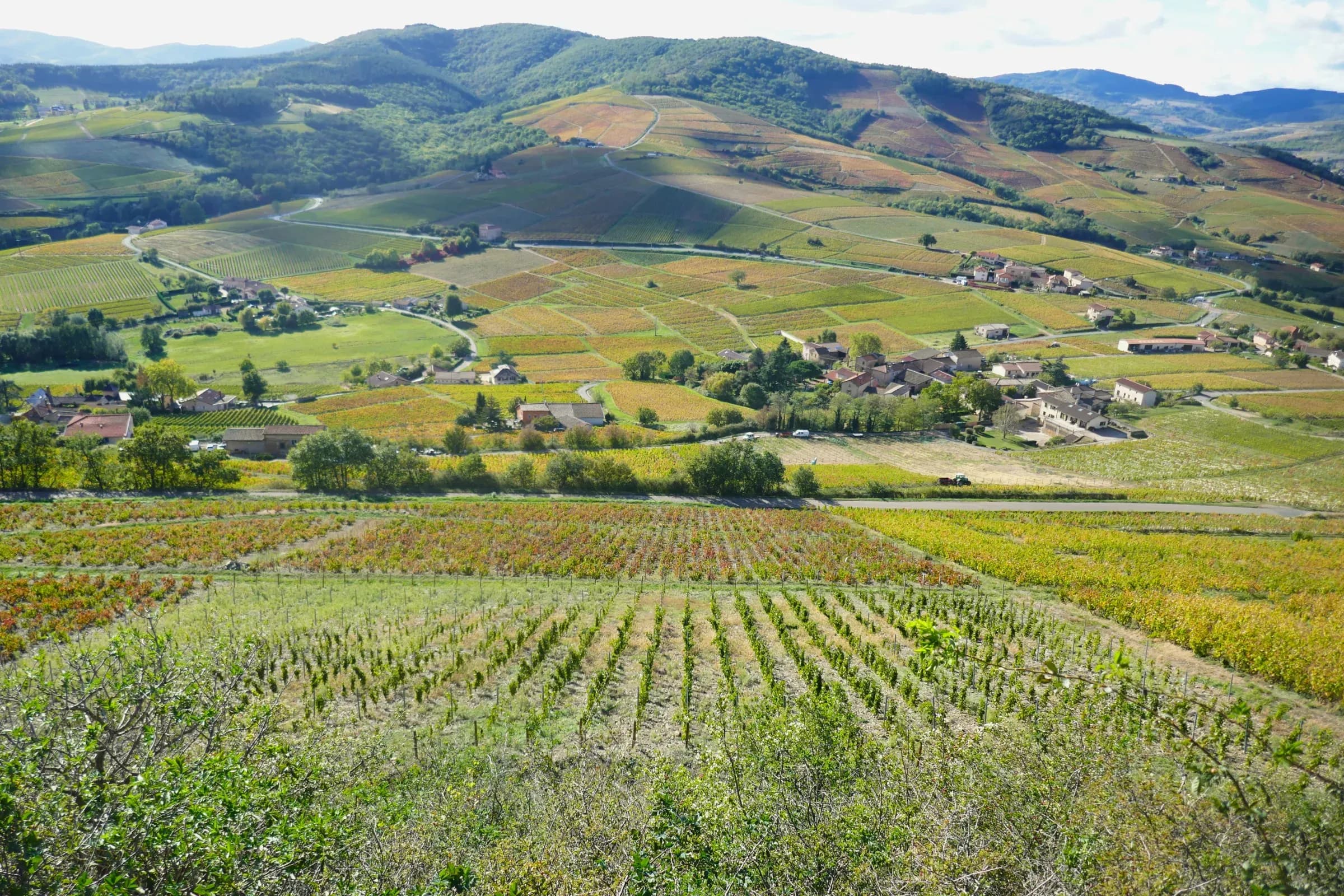
The Beaujolais wine region forms the transitional link between Burgundy to the north and the northern Rhône to the south.
It covers approximately 15,000–16,000 hectares of vineyards, stretching roughly 55 km from the Mâconnais hills to the outskirts of Lyon.
Although administratively part of Burgundy, Beaujolais has a distinct identity defined by its granitic geology, dominance of Gamay, and semi-carbonic winemaking traditions.
Climate
Beaujolais experiences a semi-continental climate with some Atlantic influence. Winters are cold and frost-prone; springs are humid, often bringing coulure or mildew risk; summers are warm but can bring hail or storm damage.
Average annual rainfall is around 750–850 mm, higher than in Burgundy’s Côte d’Or. The best vineyards lie on east- and southeast-facing slopes, where exposure aids ripening and air movement reduces frost and disease pressure.
Soils and Topography
Beaujolais divides into two main viticultural zones:
| Zone | Dominant Soil | Characteristics | Viticultural Impact |
|---|---|---|---|
| Northern Beaujolais (Haut Beaujolais / Crus zone) | Granite, schist, decomposed granitic sands | Poor, acidic, well-drained, low in nutrients | Restrains vigour, encourages deep rooting and small berries; yields concentrated, mineral wines |
| Southern Beaujolais (Bas Beaujolais) | Clay-limestone and alluvial deposits | Fertile, water-retentive | Encourages vigour and higher yields; produces softer, fruitier wines for early drinking |
Elevation ranges from 200 to over 450 metres, with the highest crus such as Chiroubles on steep granitic hillsides. This variation in altitude, slope, and aspect is key to Beaujolais’s stylistic diversity.
2. Grape Varieties and Viticulture
Varieties in Beaujolais
| Variety | Skin & Juice Colour | Budding / Ripening | Preferred Soils | Main Hazards | Advantages | Wine Profile | Role in the Region |
|---|---|---|---|---|---|---|---|
| Gamay Noir à Jus Blanc | Black skin, clear juice | Early-budding, early-ripening | Granite and schist (poor, acidic soils) | Frost, coulure, rot if over-cropped | High acidity, aromatic, adaptable | Red cherry, raspberry, violet; light to medium body, lively acidity, moderate tannin | Dominant red variety (~95–98% of plantings) |
| Chardonnay | White | Early-budding, early-ripening | Clay-limestone, fertile sites | Frost, high vigour | High acidity, finesse | Citrus, floral, white peach; light-bodied, crisp | Principal white grape (~2–3% of vineyards) |
| Gaminot (experimental) | Black | Mid-budding, early-ripening | Granite | Fungal pressure | Combines Gamay’s fruit with Pinot Noir’s structure | Darker colour, firmer structure, spiced fruit | IFV cross (Gamay × Pinot Noir); small research plots |
| Gamaret (Swiss cross) | Black | Mid-budding, mid-ripening | Schist and clay-limestone | Drought on shallow soils | Disease-resistant, colour-rich | Black cherry, cassis, moderate tannin | Pilot organic viticulture trials |
| Garanoir (Swiss cross) | Black | Mid-budding, early to mid-ripening | Deep granitic sand | Yield variability | Supple tannin, early ripening | Deep colour, soft texture, dark fruit | Limited trial plots |
| Divico (hybrid) | Black | Late-budding, mid-ripening | Poor soils | Slow sugar accumulation | Highly mildew-resistant | Dense colour, structured palate, fresh acidity | Tested in organic vineyards |
| Aligoté / Pinot Blanc / Pinot Gris (Fromenteau) | White / Pink | Mid-season | Clay-limestone | Limited adaptability to granite | Aromatic range, acid retention | Floral, rounded, lighter whites | Minor, experimental presence |
Summary:
While Gamay Noir defines Beaujolais’s red identity, the region’s research institutes (SICAREX Beaujolais, IFV) are developing crosses and hybrids such as Gaminot, Gamaret, and Divico to adapt to climate change and disease pressure.
Viticultural Practices
- Training systems: Traditional gobelet (bush vine) dominates older vineyards; newer plantings often Guyot or cordon-trellised for mechanisation and canopy control.
- Harvest: Almost entirely hand-harvested, essential for whole-bunch fermentations.
- Yields:
- Beaujolais AOC – up to 60 hl/ha
- Beaujolais-Villages – about 56 hl/ha
- Crus – 48–52 hl/ha typical maximums
- Vine age: Many top producers rely on vines 40–80 years old, producing concentrated, balanced fruit.
- Sustainability: Widespread adoption of HVE, Terra Vitis, and organic certification. Resistant varieties such as Divico are tested to reduce synthetic treatments.
3. Appellations, Subregions, and Wine Styles
Beaujolais wines are arranged in a clear three-tier hierarchy, from broad regional wines to highly specific crus.
Overview of Categories
| Category | Area / Location | Soil Type | Typical Yield (hl/ha) | Style & Structure | Typical Ageing Potential |
|---|---|---|---|---|---|
| Beaujolais AOC | Southern plains around Belleville and Villefranche-sur-Saône | Clay-limestone, alluvial | Up to 60 | Light, juicy, red-fruit, low tannin; early drinking | 1–2 years |
| Beaujolais-Villages AOC | 38 communes, mainly northern sector | Sandy granite and schist | ~56 | Medium body, floral, lively acidity, more depth | 2–4 years |
| Cru Beaujolais (10 Crus) | Northern granite hills | Decomposed granite, schist | 48–52 | Medium to full body, fine tannins, mineral structure | 3–10+ years |
The Ten Crus of Beaujolais
| Cru | Altitude / Soil | Signature Style | Ageing Potential | Key Notes |
|---|---|---|---|---|
| Saint-Amour | Granite, clay-limestone | Light to structured; floral to spicy | 3–8 yrs | Northernmost cru; variable styles |
| Juliénas | Granite, schist, alluvium | Firm, spicy, complex | 5–10 yrs | Fuller-bodied; age-worthy |
| Chénas | Thin granite, some clay | Robust, spicy, structured | 5–10 yrs | Smallest cru; powerful style |
| Moulin-à-Vent | Granitic soil rich in manganese | Powerful, tannic, Burgundian in depth | 10–15 yrs | Longest-lived; flagship cru |
| Fleurie | Pink granite | Perfumed, silky, refined | 4–8 yrs | Elegant and floral |
| Chiroubles | Highest altitude (up to 450 m) | Light, floral, delicate | 2–5 yrs | Coolest cru; fine acidity |
| Morgon | Schist and volcanic soil (Côte du Py) | Deep, structured, earthy | 5–10 yrs | Develops Pinot-like complexity |
| Régnié | Pink granite, sandy topsoil | Juicy, bright, approachable | 3–6 yrs | Youngest cru (1988) |
| Brouilly | Volcanic and granite mix | Fruity, soft, early-drinking | 2–4 yrs | Largest cru; easy-drinking wines |
| Côte de Brouilly | Steep volcanic slopes of Mont Brouilly | Structured, mineral, dark-fruited | 5–8 yrs | Firmer and spicier than Brouilly |
4. Winemaking and Styles
Fermentation Approaches
- Carbonic maceration: Whole-berry fermentation in CO₂-rich tanks; typical for Beaujolais Nouveau and lighter wines; enhances fruit, lowers tannin.
- Semi-carbonic maceration: Partial crushing or weight-induced fermentation; common for Villages wines.
- Traditional fermentation: Destemmed fruit, longer maceration; typical for crus aiming for age-worthiness.
- Ageing: Stainless steel and cement tanks predominate; larger oak vessels (foudres) occasionally used for texture rather than oak flavour.
Style Spectrum
| Style | Typical Source | Vinification | Flavour & Structure | Drinking Window |
|---|---|---|---|---|
| Beaujolais Nouveau | Southern Beaujolais | Full carbonic maceration | Light, fruity, banana and bubblegum notes | Immediate (released in November) |
| Beaujolais / Beaujolais-Villages | Transitional and northern areas | Semi-carbonic | Bright cherry, floral, medium acidity | 1–3 years |
| Cru Beaujolais | Northern granite crus | Traditional / semi-carbonic | Complex, mineral, structured, fine tannins | 3–10+ years |
5. Strengths, Weaknesses, and Market Dynamics
Strengths
- Distinctive expression of Gamay on granite: freshness, perfume, and mineral finesse.
- Clear classification hierarchy guiding consumers.
- Excellent value and versatility across styles and price points.
- Growing recognition among sommeliers for terroir-driven Crus.
Weaknesses
- Lingering Beaujolais Nouveau reputation as simple and inexpensive.
- Variable quality from fertile southern sites.
- Climatic risks: spring frost, hail, and uneven ripening.
- Early harvests under warming climate may threaten acidity balance.
Market Trends
- Rising export interest in cru wines (UK, US, Japan).
- Strong growth in organic and low-intervention production.
- Active research into climate-adapted and disease-resistant varieties (e.g., Gaminot, Gamaret, Divico).
- Balancing traditional fruit-driven style with modern terroir-focused expression.
6. Future Outlook
Beaujolais is evolving from a region defined by a single grape and a single style into one of diverse terroirs and progressive viticulture.
Research by SICAREX Beaujolais and IFV into varieties such as Gamaret, Garanoir, and Gaminot aims to secure the region’s resilience in a changing climate.
The challenge is to maintain Beaujolais’s signature freshness, vibrancy, and charm while achieving greater structure, longevity, and terroir precision.
If it succeeds, Beaujolais may redefine its place—not just as Burgundy’s southern cousin, but as one of France’s most dynamic and forward-looking red wine regions.
Check your knowledge
Expert quiz