Carbonic Maceration
Carbonic Maceration
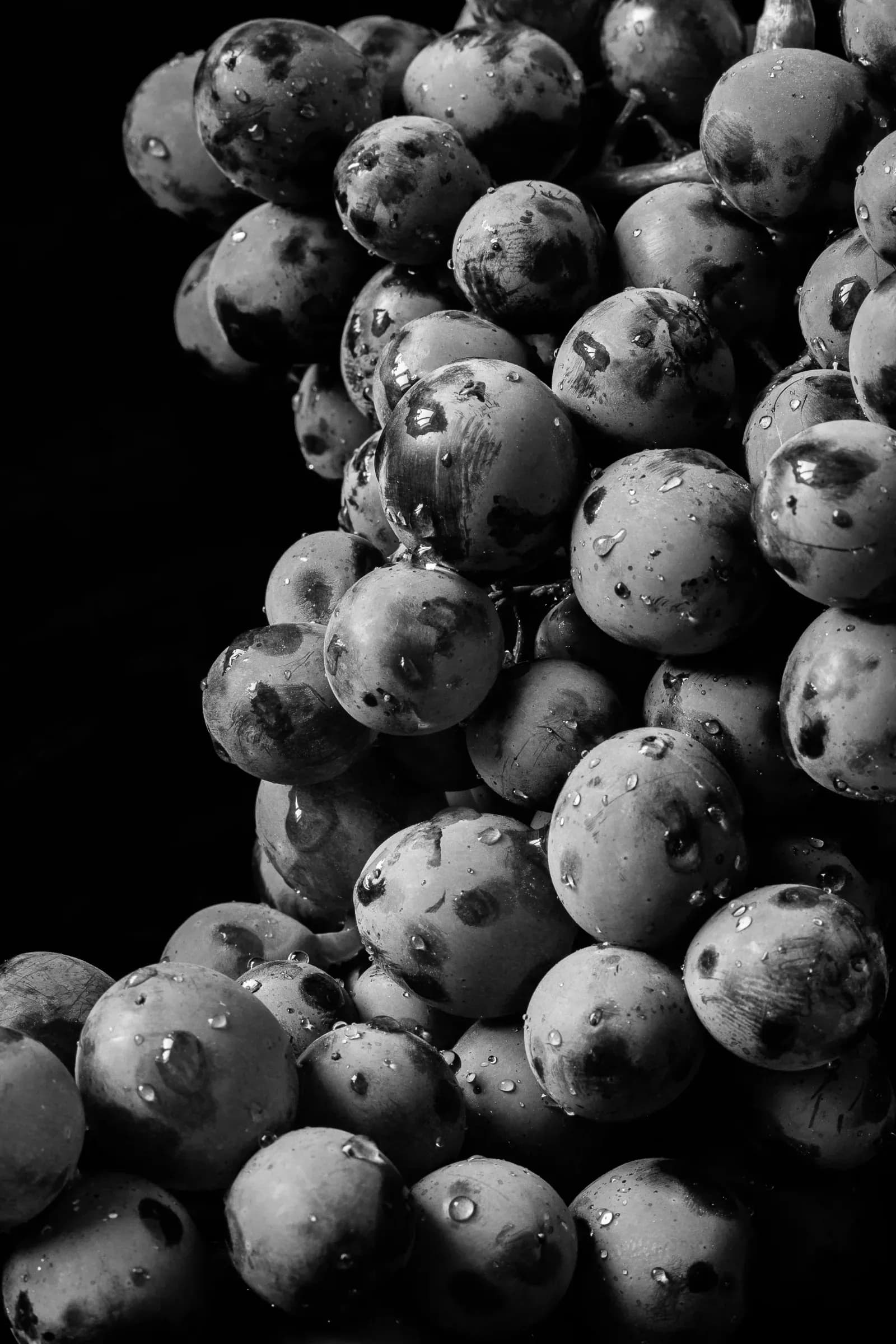
Carbonic maceration (CM) is a winemaking technique in which whole, intact grape berries ferment internally under anaerobic, CO₂-rich conditions.
It produces wines with lifted fruit, soft tannins, and early-drinking appeal.
Although historically associated with Beaujolais, carbonic and semi-carbonic maceration are now key tools for modern red, white, rosé, and orange wine styles.
1. What Carbonic Maceration Is
Carbonic maceration is an intracellular fermentation process:
- Whole berries are placed in an oxygen-free, CO₂-saturated environment.
- Enzymatic metabolism inside the berry converts malic acid → ethanol.
- Aromatic esters form (banana, raspberry, kirsch notes).
- Berries soften and eventually burst, or are pressed by the winemaker.
Intracellular alcohol reaches roughly 1.5–2% before berry collapse.
2. Carbonic vs Semi-Carbonic vs Traditional Fermentation
| Method | Description | Results |
|---|---|---|
| Full Carbonic Maceration | Whole clusters in sealed tank filled with CO₂ | Highest CM aromatics; banana, bubblegum, kirsch; lowest tannin |
| Semi-Carbonic Maceration | Whole clusters in tank; bottom berries crush under weight → yeast fermentation releases CO₂ naturally | Combination of bright fruit + moderate structure; most common CM method |
| Traditional Fermentation | Destemmed/crushed berries fermented on skins | Full extraction of tannin, varietal character, deeper colour |
Most CM in the world is semi-carbonic, not full CO₂ saturation.
3. Whole-Cluster Fermentation (WC) — Clarification
Whole-cluster (WC) fermentation is not carbonic maceration, but WC always creates pockets of natural semi-carbonic activity.
Why winemakers use whole clusters:
- Aromatic lift (rose, violet, spice), especially in Pinot Noir and Syrah
- More tannin from lignified stems
- Lower extraction → more elegance
- Fermentation complexity
- Improved freshness in warm vintages
Regions where WC is classic:
- Burgundy (Dujac, de Montille)
- Northern Rhône (Jamet, Chave)
- Beaujolais crus (semi-carbonic + WC)
- Oregon, California, Australia, Etna
WC ≠ CM, but WC often generates micro-zones of intracellular fermentation.
4. Chemistry & Sensory Signatures
Carbonic maceration increases:
- Isoamyl acetate → banana, pear drop
- Ethyl cinnamate → raspberry, strawberry
- Benzaldehyde → cherry-kirsch, almond
- 2-phenylethanol → rose
- Damascenone → floral lift
Other results:
- Lower tannin extraction
- Reduced malic acid → softer acidity
- Bright, ruby colour with lower polymerisation
5. Faults & Sensory Defects
Ethyl Acetate (EA)
The most common carbonic-related defect.
- Smell: nail polish remover, glue, solvent
- Cause: fermentation stress, warm CM, oxygen mismanagement
- Low levels: can add “lift”
- High levels: clear fault, masking fruit
Volatile Acidity (VA)
- Elevated VA from yeast/bacterial stress
- Sensory: vinegar, sharp sourness
Confected fruit (tutti-frutti)
- Overly estery aromatics
- Caused by excessive CM time or high temperatures
Colour instability
- Low tannin → less anthocyanin binding → quicker fade
6. Where Carbonic Maceration Is Used
Beaujolais (classic home)
- Gamay + granite + semi-carbonic = iconic style
- Nouveau → heavy CM; crus → partial CM for complexity
Spain
- Rioja jóvenes (Tempranillo)
- Garnacha (Campo de Borja)
- Bobal (Manchuela, Utiel-Requena)
- Mencía (Bierzo/Ribeira Sacra)
Italy
- Lambrusco (semi-CM in early stages), Dolcetto, Schiava, Frappato
- Natural wine producers (Sicily, Emilia-Romagna, Tuscany)
Australia / New Zealand
- Grenache, Shiraz, Pinot Noir for “bright-fruit” styles
Global natural-wine movement
- Semi-CM is a core technique for “glou-glou” wines
7. Carbonic Maceration in White Wines
Rare but increasingly used, especially in natural wine and warm climates.
Effects on white wines:
- Tropical/ester aromatics (banana, melon, pear drop)
- Softer acidity (malic reduction)
- Slight colour deepening / pinking
- Rounder texture without full skin-contact bitterness
Best white grapes:
- Malvasía, Muscat, Torrontés
- Pinot Gris (ramato), Xarel·lo, Listán Blanco
- Some Chardonnay (textural lift)
Poor candidates:
- Riesling, Sauvignon Blanc (esters conflict with varietal aromas)
- High-acid Alpine whites
8. Carbonic Maceration in Rosé
Semi-carbonic methods are used to create ultra-pale, aromatic, chillable rosés.
Why used in rosé:
- High aromatic lift
- Reduced phenolic bitterness
- Soft texture
- Pale colour
- Early-drinking, “vin de soif” profile
Aromas:
- Strawberry, redcurrant, rosewater
Risks:
- Confected aromas
- Lower varietal typicity
Common in Bardolino Chiaretto, Garnacha rosado, natural rosés.
9. Carbonic Maceration in Orange Wines (Skin-Contact Whites)
CM is sometimes applied before skin-contact fermentation.
Why use CM in orange winemaking:
- Softens phenolics before extraction
- Adds aromatic lift (tropical/floral)
- Reduces bitterness in thick-skinned varieties
- Creates more approachable “glou-glou orange” styles
Risks:
- ester-driven CM notes may clash with oxidative/tannic elements
- higher risk of EA
- stylistic incoherence if mismanaged
Used experimentally in Sicily (Zibibbo), Friuli/Slovenia, Canary Islands, Australia.
10. “Glou-Glou” and Carbonic Maceration
Glou-glou (“glug-glug”) refers to ultra-drinkable, juicy, low-tannin wines designed for early consumption.
Common traits:
- Bright red fruit
- Low tannin
- Light extraction
- Often slightly chilled
- Frequently semi-carbonic
- Minimal SO₂
CM is one of the quickest ways to achieve glou-glou style.
11. Grape Suitability — Why Some Grapes Work Better for CM
Carbonic maceration favours grapes with:
- Thin skins (low tannin; smooth extraction)
- Low–moderate natural tannin
- Moderate–high acidity (to compensate for malic reduction)
- Aromatic or semi-aromatic profiles
- Flavours compatible with esters (berry, floral)
- Early or moderate ripening
- Juicy phenolics
Best suited grapes — and why
Gamay, Schiava, Frappato, Listán Negro
- Thin skins, low tannin, naturally aromatic
- CM esters enhance fruit rather than mask varietal character
Grenache, Pinot Noir
- Benefit from low extraction
- Aromatic lift helps avoid heaviness in warm years
Mencía, Bobal (young vines), some Tempranillo joven
- CM softens rustic tannin and enhances freshness
Muscat/Malvasía (white CM)
- Terpenes + esters combine to yield intense aromatics
Poorly suited grapes — and why
Nebbiolo, Cabernet Sauvignon, Sagrantino, Tannat
- Thick skins + high tannin
- Need extraction to balance structure
- CM esters clash with varietal signatures
Sauvignon Blanc, Riesling
- CM esters conflict with pyrazines or terpenes
- Produces muddled, soapy aromatics
Very high-acid grapes in cool climates
- Malic reduction leads to unbalanced, hollow palate
12. Winemaking Protocols
Full Carbonic Protocol
- Whole clusters → sealed tank
- Fill with CO₂
- Intracellular fermentation for 7–14 days
- Press
- Yeast fermentation finishes off-skins
- Early bottling
Semi-Carbonic Protocol
- Whole clusters in vat
- Lower berries crush → yeast fermentation → CO₂ builds
- CM occurs in upper intact berries
- Optional gentle pump-overs
- Press at desired point
- Finish fermentation conventionally
Hybrid Approaches
- Blend destemmed + whole clusters
- Short CM before traditional fermentation
- CM lot blended into traditionally fermented wine
- CM used to lift aromatics without dominating profile
13. Advantages & Limitations
Advantages
- Intense fruit purity
- Soft, supple tannins
- Early-drinking appeal
- Mitigates harsh tannin in certain grapes
- Useful in underripe vintages
Limitations
- Reduces varietal typicity
- Low ageing potential (except partial CM in structured wines)
- Risk of EA and confected fruit
- Colour instability
- Not suited to high-tannin varieties
14. Summary
Carbonic maceration is both a classic technique and a modern tool.
In full form, it produces bright, juicy, low-tannin wines; in partial form (semi-carbonic, whole-cluster), it is used to finesse structure, moderate tannin, and lift aromatics.
Its adaptation to white, rosé, and orange wines shows how flexible CM has become within contemporary winemaking.
Understanding the biochemical, structural, and stylistic implications of carbonic maceration allows winemakers to recognise when and why this technique should be used.
Check your knowledge
Expert quiz