Northern Rhone Spotlight
Northern Rhône Viticulture, Winemaking, and Production Overview
1. Climate and Environment
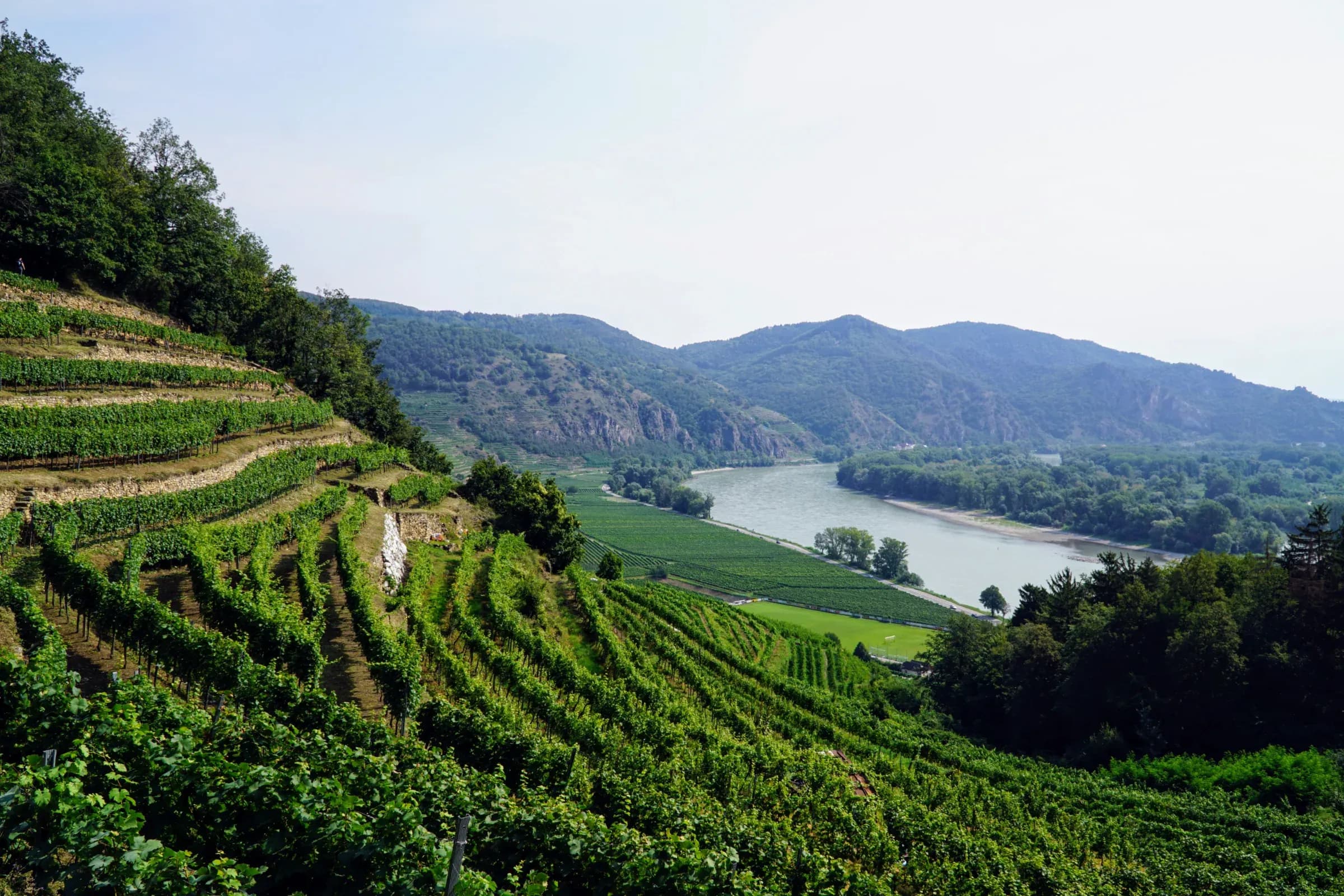
The Northern Rhône stretches roughly 75 km from Vienne in the north to Valence in the south. The valley follows the course of the River Rhône, with steep, terraced vineyards rising above the riverbanks.
The climate is continental, with cold winters, warm summers, and a long autumn ripening period. Average rainfall is 700–900 mm, concentrated in spring and autumn.
The Mistral wind—a strong, cold, dry northerly—plays a major role. It reduces humidity and disease pressure but can damage young shoots and impede flowering.
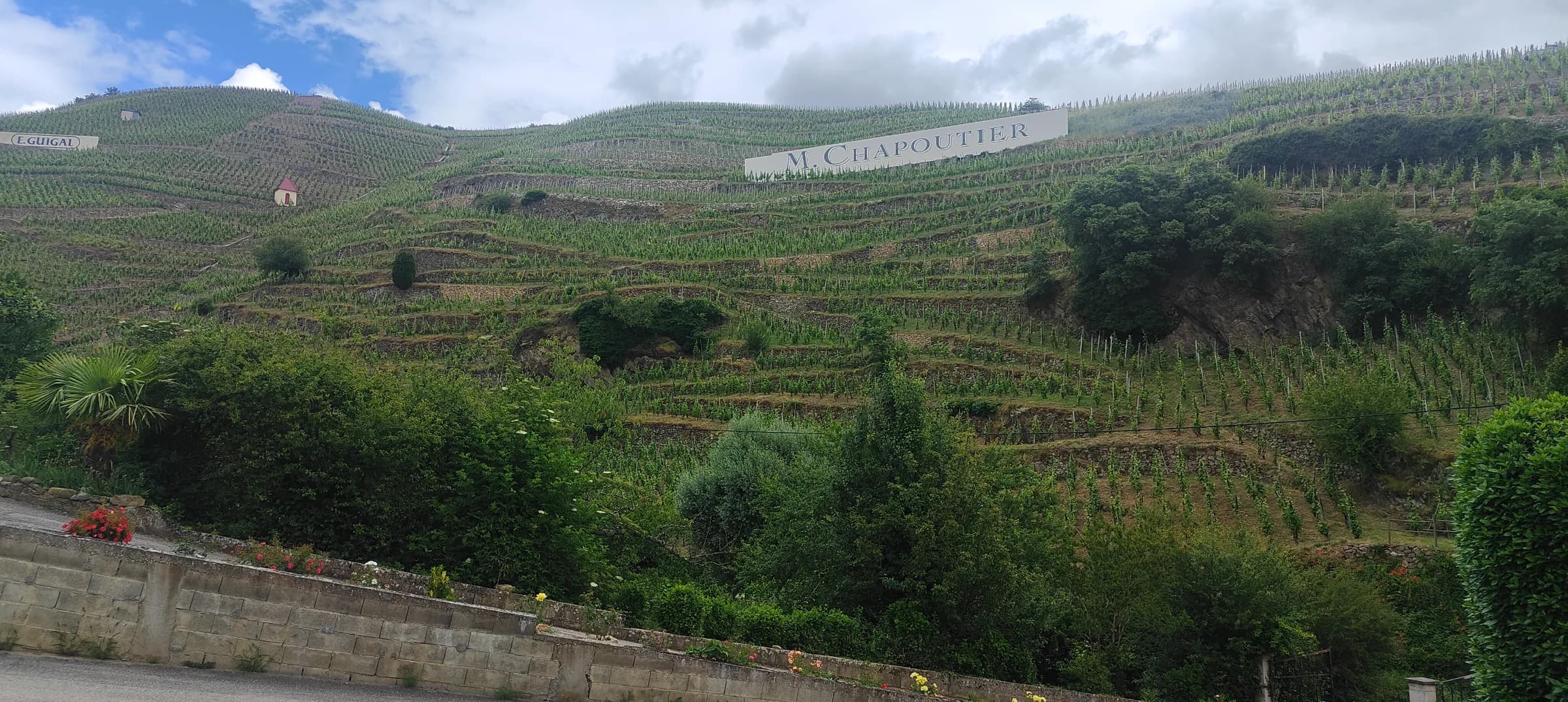
The steep slopes, often at 30–60°, ensure good drainage and exposure, while the Rhône River moderates temperature extremes and reflects sunlight onto the vines.
2. Soils and Terroir
The Northern Rhône’s geology is dominated by granite, gneiss, schist, and mica, often with patches of loess or clay on lower slopes. These soils retain heat and promote deep root penetration while providing excellent drainage.
- Côte-Rôtie: Weathered schist and mica dominate, divided into two main slopes:
- Côte Brune: Dark, iron-rich schist; cooler, heavier soils; produces structured, tannic, long-lived Syrah.
- Côte Blonde: Lighter mica-schist and gneiss; warmer, sandier soils; yields more perfumed, elegant wines.
The combination of both adds depth and complexity to many top cuvées.
- Condrieu: Decomposed granite called arzelle; thin, acidic soils giving low yields and high aromatic intensity in Viognier.
- Saint-Joseph: Mixed granite and gneiss; some clay in lower sites; wines range from powerful to lighter, early-drinking styles.
- Hermitage: Diverse—granite in the west (Bessards), alluvial gravel and limestone mid-slope, loess and sand eastwards; produces Syrah of power and longevity.
- Crozes-Hermitage: Alluvial and loess plains around Hermitage; less steep, giving softer, fruit-forward Syrah.
- Cornas: Pure granite with high iron content; south- and southeast-facing terraces; warmest appellation, yielding rich, dense Syrah.
- Saint-Péray: Limestone and clay with alluvial deposits; base for still and sparkling whites (Marsanne and Roussanne).
3. Grape Varieties and Key Characteristics
Red Grapes
| Variety | Budburst / Ripening | Skin Thickness | Acidity | Tannins | Flavour Intensity | Typical Flavours | Role / Style | Main Hazards |
|---|---|---|---|---|---|---|---|---|
| Syrah | Early / Late | Thick | Medium–High | High | High | Blackberry, violet, black pepper, olive, smoke, leather | Only permitted red grape; from elegant Côte-Rôtie to dense Cornas | Mistral wind, coulure, shrivel on steep terraces |
Syrah reaches its northernmost limit here. The combination of warmth, steep exposures, and poor soils enables full ripening while maintaining acidity and aromatics. Co-fermentation with Viognier (up to 20% in Côte-Rôtie) stabilises colour and enhances perfume.
White Grapes
| Variety | Budburst / Ripening | Skin Thickness | Acidity | Flavour Intensity | Typical Flavours | Role / Style | Main Hazards |
|---|---|---|---|---|---|---|---|
| Viognier | Early / Mid | Thick | Low | Very High | Apricot, peach, honeysuckle, ginger | Exclusive to Condrieu and Château-Grillet; also co-fermented in Côte-Rôtie | Coulure, over-ripeness, frost |
| Marsanne | Mid / Mid–Late | Medium | Medium | Medium–High | Pear, almond, honey, wax | Primary white in Hermitage, Crozes-Hermitage, Saint-Péray | Coulure, excessive vigour |
| Roussanne | Mid / Mid–Late | Thin | High | High | White flowers, citrus, herbal, hazelnut | Blended with Marsanne for structure and aromatics | Poor fruit set, rot |
4. Vineyard Management
Steep slopes make mechanisation almost impossible. All vineyard work—pruning, canopy management, harvesting—must be done by hand.
Vines are often staked individually (échalas) to withstand the Mistral.
Terracing prevents erosion and maximises exposure. Rebuilding walls is labour-intensive and costly.
Planting density ranges from 8,000–10,000 vines/ha on the steepest terraced slopes (Côte-Rôtie, Hermitage, Cornas) to about 3,000–5,000 vines/ha on gentler or mechanised terrain (Saint-Joseph, Crozes-Hermitage).
Hazards: Frost in low areas, erosion from storms, coulure during flowering, and Mistral wind damage.
Viticulture: Increasing move toward sustainable and organic farming, with limited herbicide use and soil cultivation to maintain biodiversity.
5. Yields and Production Levels
Total vineyard area: ≈ 4,700–4,800 ha.
Average annual production: ≈ 250,000–300,000 hL (25–30 million litres).
Reds: ≈ 90% of output. Whites: ≈ 10%.
| Appellation | Legal Max Yield (hL/ha) | Typical Average (hL/ha) | Notes |
|---|---|---|---|
| Côte-Rôtie | 40 | 30–38 | Extremely low yields from steep terraces. |
| Condrieu / Château-Grillet | 40 | 25–35 | Low yields preserve Viognier concentration. |
| Saint-Joseph | 40 (red) / 45 (white) | 35–40 | Wide variation across large area. |
| Hermitage | 40 (red) / 45 (white) | 30–38 | Yields kept low for intensity and longevity. |
| Crozes-Hermitage | 45 (red) / 50 (white) | 40–45 | Larger, flatter sites; moderate yields. |
| Cornas | 40 | 30–35 | Warm granite slopes; small yields, high concentration. |
| Saint-Péray | 45 (still/sparkling) | 35–40 | Moderate yields ensure freshness. |
6. Appellations Overview
Major Appellations (North to South)
- Côte-Rôtie AOC: 100% Syrah or co-fermented with up to 20% Viognier. Steep terraces; elegant, perfumed, and age-worthy.
Côte Brune produces firmer, more structured wines; Côte Blonde yields softer, more aromatic styles. Top cuvées blend both for balance.
Top producers: Guigal, Jamet, Clusel-Roch, Ogier. - Condrieu AOC / Château-Grillet AOC: 100% Viognier; rich, oily texture with stone fruit and floral aromatics. Producers: Georges Vernay, Yves Cuilleron, Guigal.
- Saint-Joseph AOC: Syrah (reds) and Marsanne/Roussanne (whites); large, diverse appellation producing both approachable and structured styles. Producers: Chave, Gonon, Coursodon.
- Hermitage AOC: South-facing granite hill; Syrah-based reds (with optional 15% white varieties) and long-lived whites (Marsanne, Roussanne). Producers: Jaboulet, Chapoutier, Chave, Delas.
- Crozes-Hermitage AOC: Largest appellation; flatter terrain; earlier-drinking, fruit-driven Syrah and some Marsanne/Roussanne whites. Producers: Graillot, Chapoutier, Cave de Tain.
- Cornas AOC: 100% Syrah; granite terraces, warmest site, producing full-bodied, dark, powerful wines. Producers: Clape, Allemand, Courbis.
- Saint-Péray AOC: Only white wines; still and traditional-method sparkling from Marsanne and Roussanne. Producers: Alain Voge, Bernard Gripa.
7. Winemaking Practices
Reds
- Fermentation: Traditional open-top vats; indigenous or selected yeasts; co-fermentation with Viognier in Côte-Rôtie.
- Extraction: Gentle punch-downs (pigeage) and pump-overs (remontage).
- Maturation: 12–36 months in oak (part new, often large barrels or demi-muids). Hermitage and Cornas use more new oak; Côte-Rôtie emphasises finesse and fragrance.
- Trends: Reduced new oak, whole-bunch fermentation for aromatic lift, minimal filtration.
Whites
- Fermentation: Stainless steel or oak barrels.
- Lees contact: Common to enhance texture (especially Viognier, Marsanne).
- Malolactic: Usually completed for Marsanne/Roussanne; sometimes partial for Viognier.
- Style: From fresh and floral (Condrieu) to rich, honeyed, and waxy (Hermitage Blanc).
8. Distinctive Viticultural Challenges
- Steep terrain complicates mechanisation and raises labour costs.
- Mistral wind can damage canopies but reduces disease pressure.
- Erosion is severe on granite and schist slopes, requiring terraces and cover crops.
- Limited vineyard area makes land extremely valuable and production limited.
9. Recent Trends
- Expansion of organic and biodynamic viticulture (notably Chapoutier, Chave).
- Whole-cluster fermentation regaining popularity for aromatic complexity.
- Growth in single-parcel bottlings and terroir-driven labeling.
- Rising esteem for white wines (Hermitage Blanc, Condrieu) for ageability.
- Ongoing terrace restoration and erosion control projects.
10. Advantages and Disadvantages
Advantages:
- Ideal synergy of granite soils, slopes, and continental climate.
- Syrah ripens fully while retaining acidity.
- Mistral wind reduces disease pressure.
- Clear terroir distinction between appellations.
Disadvantages:
- Manual viticulture increases costs.
- Coulure and wind reduce yields.
- Small vineyard area limits expansion.
11. Reputation and Market Position
The Northern Rhône is revered for producing the world’s most refined Syrah and distinctive, age-worthy whites.
Côte-Rôtie blends perfume and grace (from Côte Blonde) with structure (from Côte Brune).
Hermitage defines power and longevity; Cornas delivers boldness; Condrieu showcases Viognier’s sensuality.
Producers like Guigal, Chave, and Chapoutier have elevated the region’s prestige. Small scale and high costs keep supply limited and prices strong in global markets.
12. Summary
The Northern Rhône epitomises granite terroir, steep slopes, and Syrah mastery.
Reds—from the perfumed Côte-Rôtie (Côte Brune and Côte Blonde) to dense Cornas—combine intensity and elegance, while whites from Viognier, Marsanne, and Roussanne balance richness with minerality.
Its terraces, Mistral winds, and artisanal viticulture yield small quantities of exceptional wines, confirming the Northern Rhône as one of the world’s most prestigious fine-wine regions.
Check your knowledge
Expert quiz