Pinot Noir
Pinot Noir Viticulture and Winemaking
1. Grape Characteristics
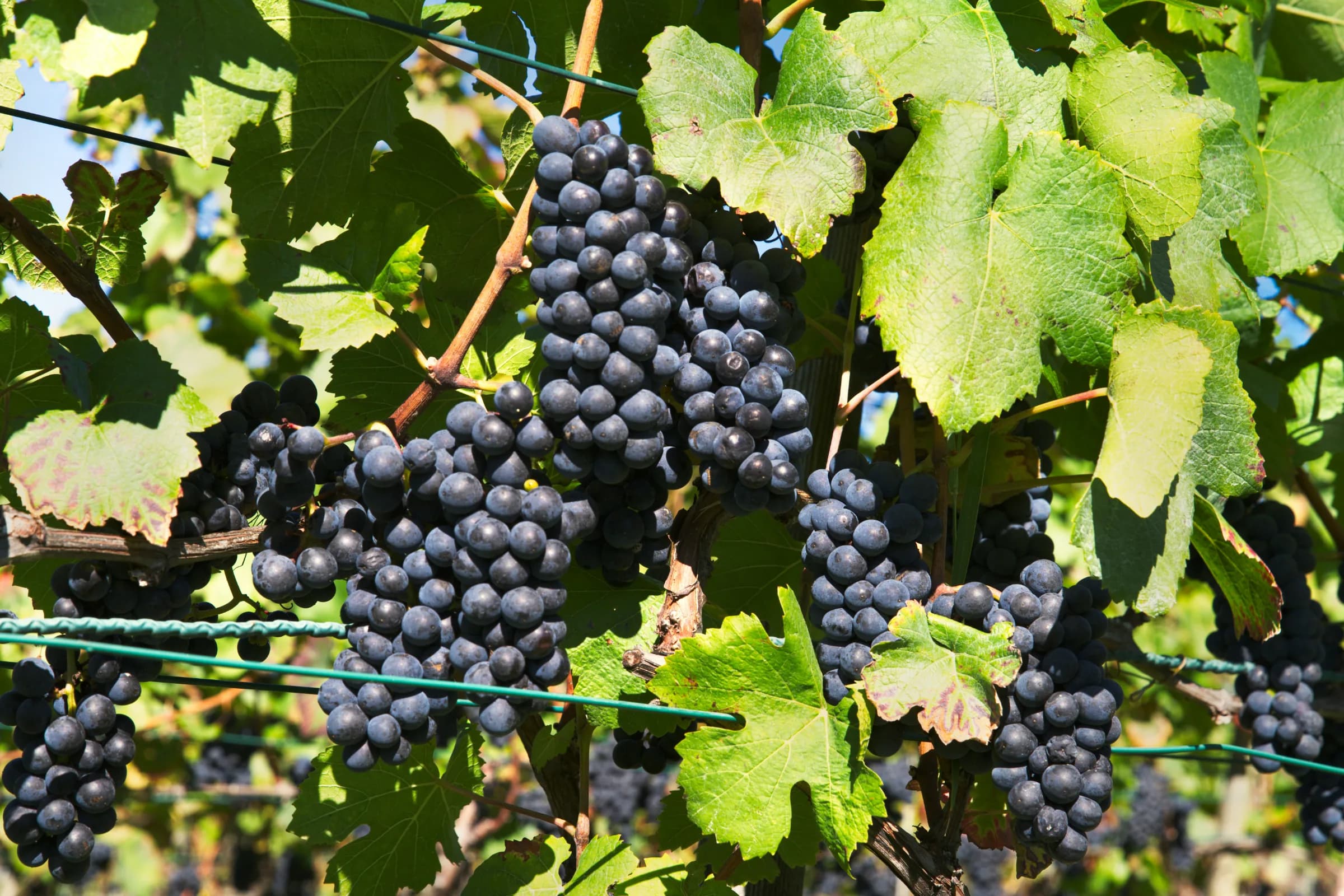
Pinot Noir is an early-budding, early-ripening black variety with thin skins and low colour and tannin.
It needs a cool to cool-moderate climate (14–17 °C growing-season average) to preserve its perfume and acidity.
Best results come from limestone or marl soils, moderate rainfall, and long, gentle autumns.
Key hazards: spring frost, coulure and millerandage during flowering, botrytis (thin skins), sunburn and drought in hot vintages.
2. Vineyard Management and Yields
High quality requires low yields and careful canopy control.
Typical fine-wine yields: 30–45 hL/ha for still wines; sparkling bases (e.g., Champagne) are much higher, often around 90–100 hL/ha.
Traditional regions plant at high densities (8 000–10 000 vines/ha) to encourage root competition and concentration.
3. Winemaking
- Sorting: essential to remove diseased fruit.
- Fermentation: usually in small, open vats; gentle extraction (limited pigeage or remontage).
- Whole-cluster fermentation (some stems retained) adds floral notes and spice.
- Aging: 10–18 months in French oak; 20–50 % new for top wines.
- Minimal filtration to maintain texture and perfume.
4. Major Regions and Styles
France
- Burgundy: the benchmark – fine acidity, red-cherry and floral aromas, silky tannins; limestone-marl soils.
Yields: Grand Cru ~35 hL/ha; Premier Cru/Village 40–45 hL/ha. - Champagne: structural base for sparkling wines; also still reds (Coteaux Champenois).
- Alsace: ~1 650 ha; bright, red-fruited wines with lively acidity; limestone and volcanic soils; yields 50–60 hL/ha, lower for premium cuvées.
Germany (Spätburgunder)
~11 700 ha; cooler sites like the Ahr give delicate, slate-driven styles; Baden produces richer examples.
United States
- Oregon (Willamette Valley): red-cherry, floral, and spice-tea aromas; moderate oak.
- California: coastal AVAs (Sonoma Coast, Sta. Rita Hills) yield riper, structured styles.
New Zealand
~5 800 ha; Central Otago (dark cherry, thyme) and Martinborough (savoury, structured) lead quality.
Others
Tasmania and Yarra Valley (Australia) – elegant, spicy;
Chile’s Casablanca and South Africa’s Hemel-en-Aarde – cool, ocean-influenced finesse.
5. Trends and Key Facts
- Return to whole-cluster fermentation and lower new-oak use.
- Rapid growth in organic and biodynamic viticulture.
- Global surface: ~115 000 ha (OIV 2023).
- Yields: 30–45 hL/ha for still, 90–100 hL/ha for sparkling.
6. Style and Appeal
Typical style: pale colour, red-fruit aromas, medium (+) acidity, fine tannins, moderate alcohol.
Its appeal lies in transparency to terroir—each site’s soil, slope, and climate clearly expressed—making Pinot Noir one of the world’s most captivating and complex grape varieties.
Check your knowledge
Enthusiast quiz