Rías Baixas
Rías Baixas: Region Overview
1. Location and Climate
Rías Baixas is in Galicia, north-west Spain, along the cool, wet Atlantic coast near Portugal.
The name means “Lower Estuaries,” referring to the fjord-like inlets that moderate the climate.
The region has a cool maritime climate with mild temperatures and high rainfall (1 400–1 800 mm), producing wines with high acidity and freshness.
Frequent humidity means that growers must control mildew and rot carefully.
2. Sub-zones and Soils
The DO has five sub-zones, each with its own micro-climate and style:
| Sub-zone | Location & Climate | Soils | Wine Style |
|---|---|---|---|
| Val do Salnés | Near Cambados; coolest and most maritime | Granite and sand | Light, saline, citrus-driven wines |
| O Rosal | South, on the Portuguese border | Granite with alluvial clay | Floral, rounder Albariño blends |
| Condado do Tea | Inland and warmest | Granite and schist | Fuller, riper whites, sometimes oaked |
| Soutomaior | Small zone near Vigo | Steep granite slopes | Concentrated, mineral wines |
| Ribeira do Ulla | North, cooler and more continental | Granite and siliceous sand | Crisp, delicate styles |
3. Grapes
Main White Grapes
| Grape | Key Traits | Role in Wines |
|---|---|---|
| Albariño | Thick-skinned, high-acid, citrus and peach flavours; keeps freshness and saline notes | The dominant grape (> 95 %) for varietal and blended wines |
| Treixadura | Softer acidity, floral and pear notes | Adds weight and roundness, used in inland blends |
| Loureira | Aromatic, with lime and bay-leaf aromas | Brings perfume to blends from O Rosal |
| Godello & Caiño Blanco | Fuller body and firm acidity | Used in small quantities for structure and texture |
Local Reds (small but growing)
Caiño Tinto, Espadeiro, Sousón, Mencía – produce light, fresh reds with red-cherry and pepper notes; very small production but high quality in warmer inland sites.
4. Viticulture
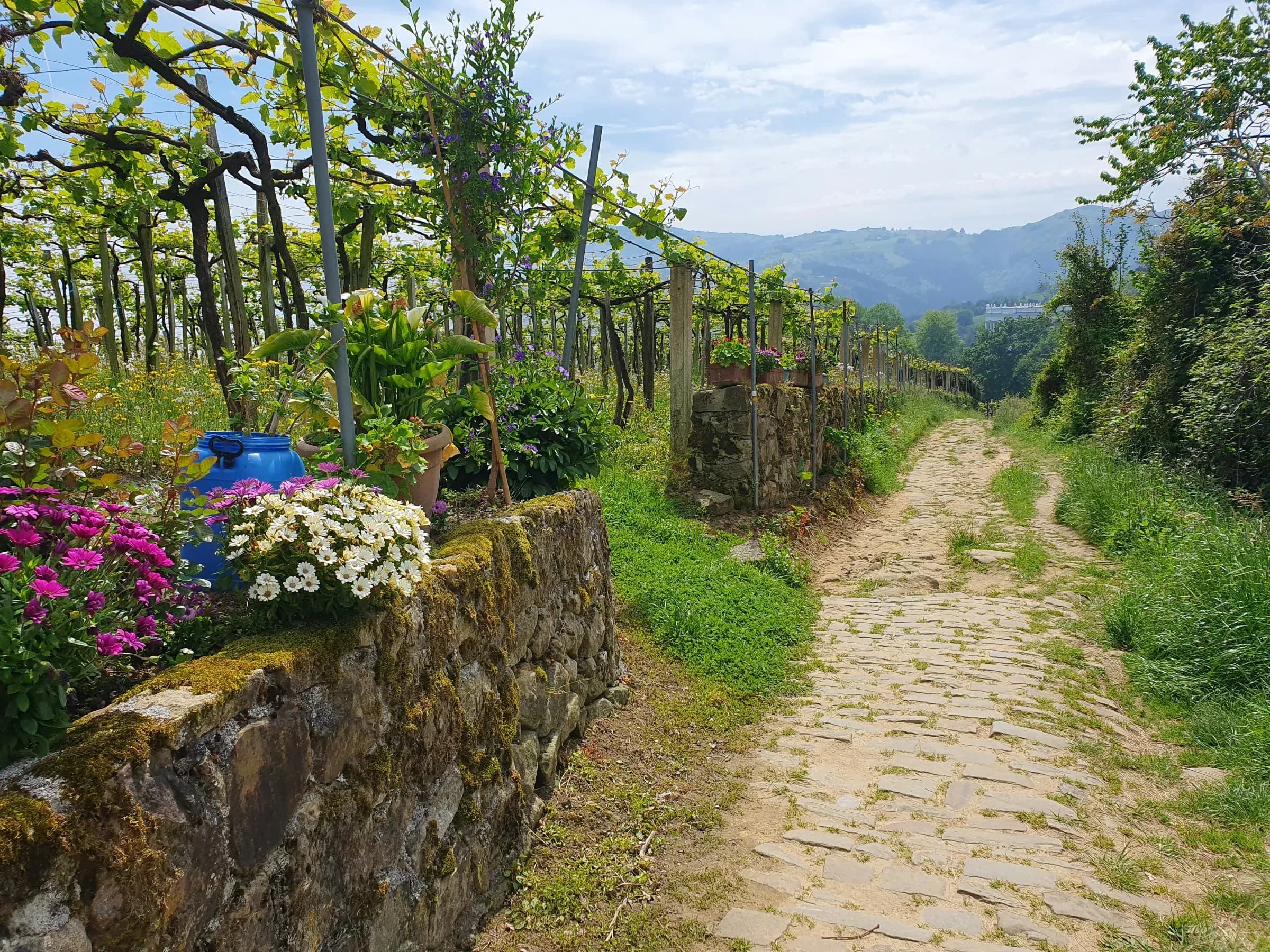
- Rain and humidity cause mildew and botrytis; vines are trained high on pergolas (parras) for air circulation.
- Newer vineyards use vertical-shoot positioning (VSP) for better control and mechanisation.
- Typical yields are 60–70 hl/ha.
- Grapes are usually hand-harvested and pressed quickly to avoid oxidation.
- Sustainable and organic farming is increasing.
5. Winemaking and Styles
- Most wines are fermented in stainless steel at cool temperatures to preserve aromatics.
- Some are aged on lees (sobre lías) for extra body and texture.
- Partial malolactic fermentation or neutral oak ageing is used by a few producers for richness.
- Sparkling Albariño (Rías Baixas Espumoso) is a new, small category.
| Style | Technique | Typical Profile | Example Producers |
|---|---|---|---|
| Classic Albariño | Stainless steel, early bottling | Citrus, green apple, saline finish | Do Ferreiro, Pazo de Señorans |
| Lees-Aged Albariño | 6–12 months on lees | Creamier texture, ripe stone fruit | Zárate, Granbazán |
| Blends (O Rosal / Condado) | Albariño + Treixadura/Loureira | Floral, round, softer acidity | Terras Gauda, Santiago Ruiz |
| Single-Parcel / Aged | Long lees ageing, late release | Complex, mineral, age-worthy | Pazo de Señorans Selección de Añada, Do Ferreiro Cepas Vellas |
6. Reds
Small amounts of Caiño Tinto and Espadeiro are made, mainly in Condado do Tea and O Rosal.
They are light-bodied, aromatic, and high in acidity – similar in freshness to red wines from northern Portugal.
Notable producers: Forjas del Salnés, Zárate, Albamar, Nanclares y Prieto.
7. Market and Outlook
- Production: ~300–400 000 hl annually; ~4 000 ha under vine.
- Exports: around 40 % (mainly USA, UK, Ireland).
- Prices: core Albariños €9–15; aged and single-parcel wines €20–45+.
- Co-operatives: vital for small growers (e.g., Martín Códax).
Trends
- Increasing focus on age-worthy Albariños with lees ageing and late release.
- Revival of blends and local reds to add diversity.
- Growing attention to sustainability and vineyard management.
- Global expansion of Albariño:
- Portugal (Vinho Verde / Monção e Melgaço) – established.
- France (Languedoc, Gascogne) – newly authorised.
- New Zealand, Australia, USA, Uruguay, Argentina – small but growing plantings.
These new origins highlight Albariño’s adaptability but increase competition for Rías Baixas.
8. Summary
Rías Baixas is Spain’s leading Atlantic white-wine region, famous for its crisp, aromatic Albariños grown on granite soils near the sea.
Its five sub-zones produce a range of styles, from lean and saline to ripe and textural.
Future growth will depend on balancing Albariño’s global fame with regional diversity, premium ageing potential, and continued commitment to sustainable viticulture.
Check your knowledge
Enthusiast quiz