Sauvignon Blanc
1. Grape and Characteristics
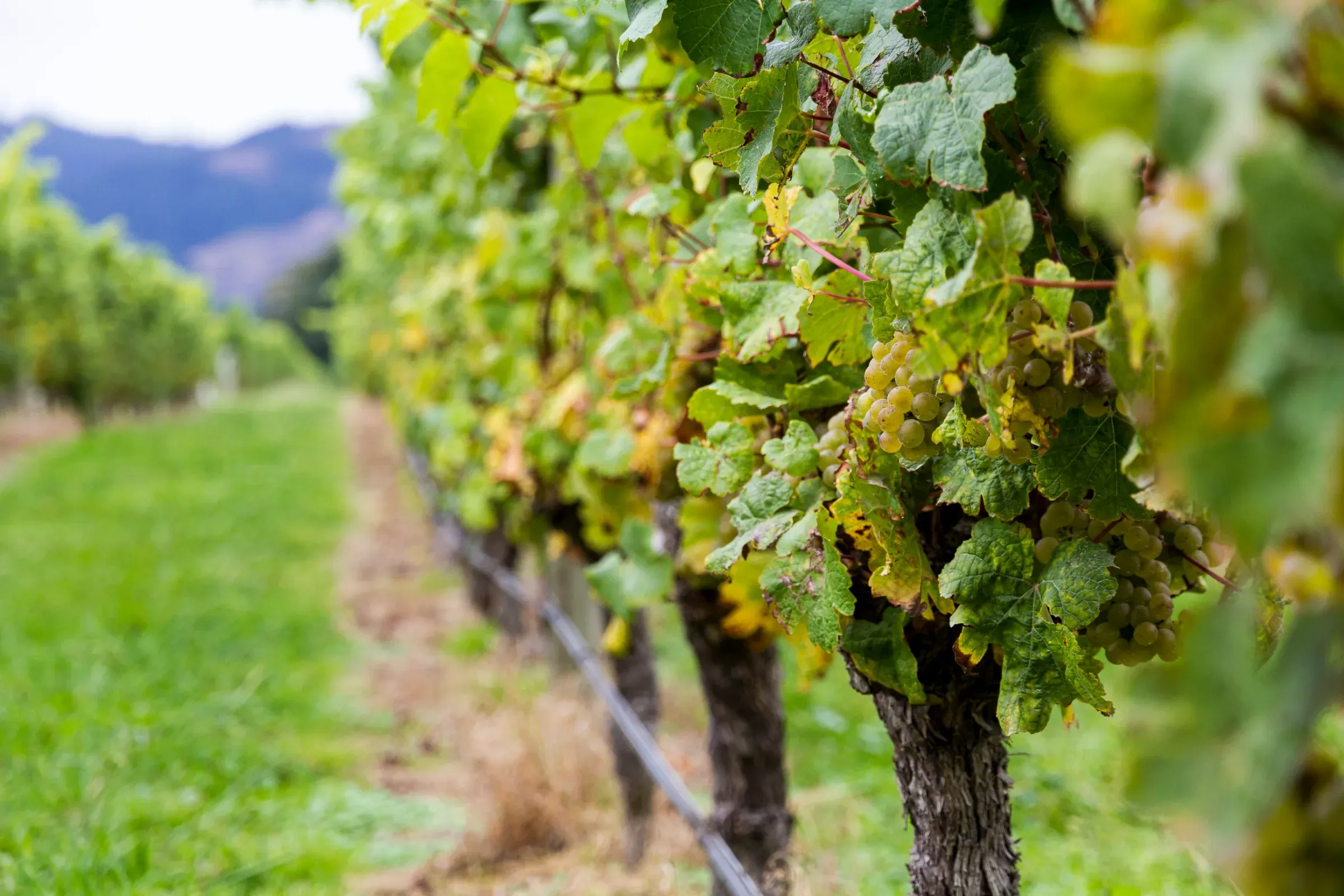
Sauvignon Blanc is a white grape that grows best in cool to moderate climates.
It buds and ripens early, producing wines with high acidity and intense aromas of citrus, green fruit, and herbs.
When grown in warmer areas, it can develop riper tropical flavours such as passionfruit and melon but may lose freshness if picked too late.
2. Main Growing Regions and Styles
Loire Valley (France)
- Appellations: Sancerre, Pouilly-Fumé, Touraine.
- Climate: Cool continental.
- Soils: Chalk, limestone, and flint (silex).
- Style: Dry, crisp, and mineral with flavours of lemon, green apple, and herbs.
- Typical Yield: Around 50–60 hl/ha in the top appellations.
These are considered benchmark Old World styles, showing elegance and precise acidity.
Bordeaux (France)
- Regions: Graves and Pessac-Léognan.
- Climate: Mild maritime with more rainfall.
- Soils: Gravel and sand.
- Style: Usually a blend of Sauvignon Blanc and Sémillon, often fermented or aged in oak for texture.
- Flavours: Grapefruit, peach, toast, and honey as it ages.
Pays d’Oc (Southern France)
- Location: Languedoc, along the Mediterranean coast.
- Climate: Warm and dry with cooling sea breezes.
- Style: Fruity and easy-drinking; ripe citrus and tropical notes.
- Production: Very high – the largest source of varietal Sauvignon Blanc in France, made mainly in stainless steel for freshness.
Offers excellent value and widely available supermarket styles.
New Zealand
- Region: Marlborough (South Island).
- Climate: Cool maritime with long daylight hours.
- Soils: Alluvial and free-draining gravel.
- Style: Very aromatic with gooseberry, passionfruit, and lime; vibrant acidity and no oak.
- Market: Defines the modern Sauvignon Blanc style and accounts for the majority of NZ wine exports.
Chile
- Regions: Casablanca, San Antonio, Leyda.
- Climate: Cool maritime from the Humboldt Current.
- Soils: Sandy or granitic.
- Style: Bright, citrus-led wines with moderate tropical fruit; less overtly green than New Zealand styles.
- Market: Known for good quality at affordable prices.
South Africa
- Regions: Elgin, Durbanville, Stellenbosch.
- Climate: Coastal Mediterranean; cooled by ocean winds.
- Style: Zesty and refreshing with grapefruit, fig, and mineral notes.
- Some producers use barrel ageing for richer “Reserve” wines.
Australia and USA
- Australia: Adelaide Hills and Margaret River – fresh, grassy styles or richer Sauvignon/Sémillon blends.
- USA (California): Warm days and cool nights; styles range from crisp and unoaked to fuller oak-aged “Fumé Blanc”.
3. Winemaking Approaches
- Stainless-steel fermentation keeps wines light, fresh, and aromatic.
- Oak fermentation and lees ageing add weight and complexity (common in Bordeaux and some New World producers).
- Early harvesting preserves acidity and green fruit; later picking gives riper tropical flavours.
- Malolactic fermentation is usually avoided to keep the wine sharp and lively.
4. Typical Styles
| Region / Country | Style & Flavours | Body | Acidity | Oak Use |
|---|---|---|---|---|
| Loire Valley (Sancerre, Pouilly-Fumé) | Green apple, lemon, herbaceous, mineral | Light- to medium | High | None |
| Bordeaux (Graves, Pessac-Léognan) | Grapefruit, peach, toast, honey | Medium | Medium-high | Common |
| Pays d’Oc (IGP) | Ripe citrus, melon, tropical fruit | Light | Medium | Rare |
| New Zealand (Marlborough) | Gooseberry, passionfruit, lime | Light-medium | High | None |
| Chile / South Africa | Lemon, grapefruit, subtle tropical | Light-medium | Medium-high | Minimal |
5. Strengths and Challenges
Strengths
- Distinctive, recognisable style loved by consumers worldwide.
- Adaptable to many climates and soils.
- Excellent freshness and food-pairing versatility.
Challenges
- Overproduction and style repetition can cause consumer fatigue.
- Sensitive to climate warming, which can reduce acidity and aromatics.
- Faces competition from other aromatic whites like Albariño and Grüner Veltliner.
6. Summary
Sauvignon Blanc is one of the world’s most popular and expressive white grapes.
From the flinty, mineral wines of the Loire to the tropical, vibrant styles of Marlborough and the value-driven wines of the Pays d’Oc and Chile, it offers exceptional diversity.
Its future success depends on maintaining freshness and balance while exploring new terroirs and winemaking styles that highlight its versatility.
Check your knowledge
Enthusiast quiz