Canary Islands & Balearic Islands
Canary Islands & Balearic Islands
1. Overview
Spain’s Canary and Balearic Islands make very different styles of wine because their climates and soils are completely different.
The Canary Islands are volcanic, windy, and often very steep, giving fresh, salty whites and light, peppery reds.
They were long known for their ungrafted vines, although phylloxera has recently been detected on Tenerife.
The Balearic Islands (especially Mallorca) have a warm Mediterranean climate and make fuller, fruitier reds and soft, gentle whites.
2. Canary Islands
Key features
- Volcanic soils: basalt, ash, picon
- Atlantic cooling winds
- Many old vines still ungrafted
- Famous vineyard systems like hoyos and cordón trenzado
Regions
- Tenerife: aromatic whites, fresh reds
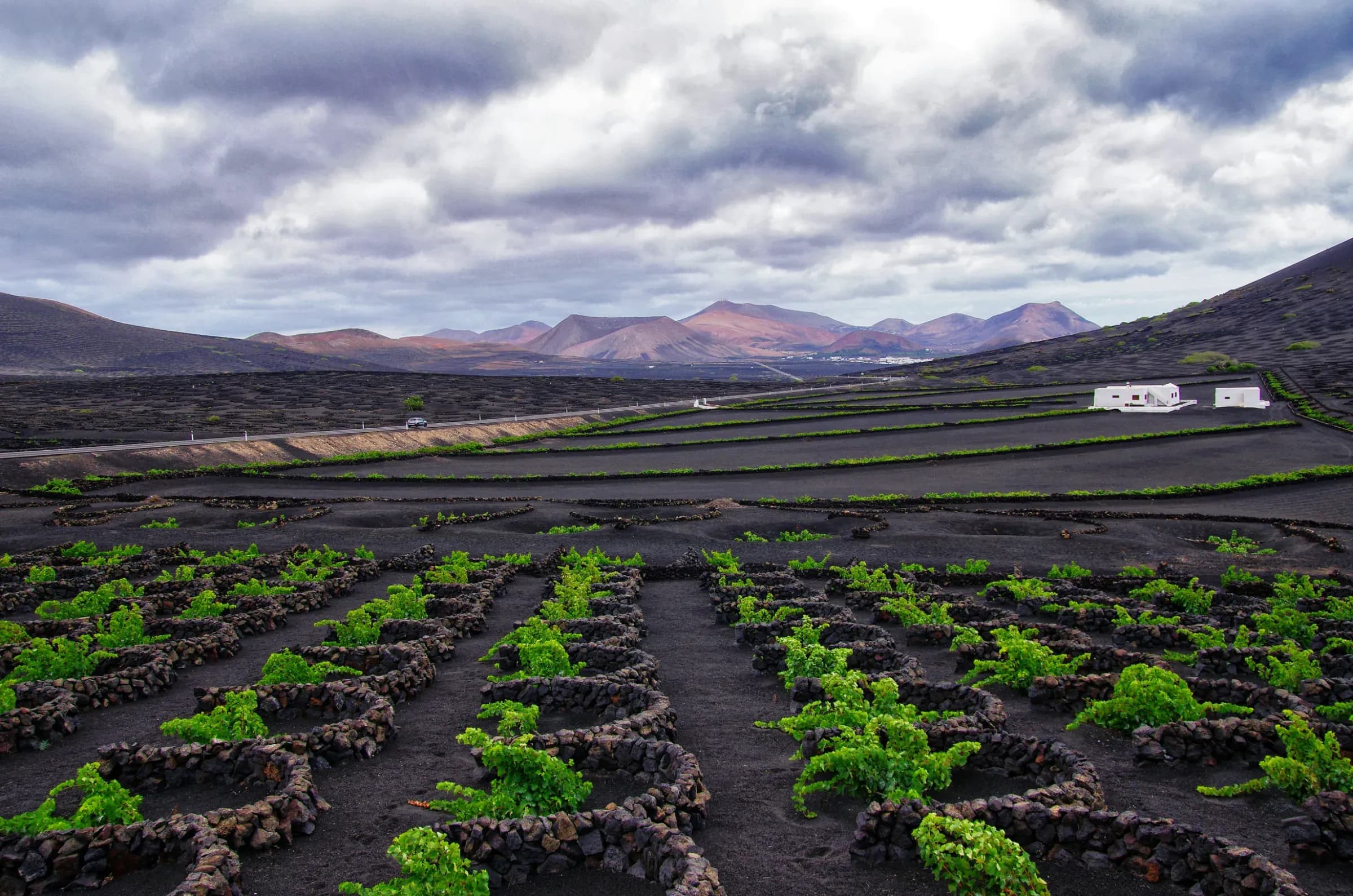
- Lanzarote: vines grown in pits called hoyos to protect from wind
- La Palma / Gran Canaria: delicate reds and aromatic whites
Grapes
- Listán Negro: pale, peppery reds
- Negramoll: soft, light reds
- Malvasía Volcánica: aromatic, salty whites
- Listán Blanco: neutral, mineral whites
3. Balearic Islands
Key features
- Warm Mediterranean climate
- Limestone soils
- Mix of local and international grapes
Regions
- Binissalem DO: Manto Negro reds
- Pla i Llevant DO: Callet, Fogoneu, and blends
- Mallorca/Menorca VdlT: small-scale, coastal wines
Grapes
- Manto Negro: warm, soft reds
- Callet: pale, herbal, elegant reds
- Prensal Blanc: soft, fruity whites
- Giró Ros: textural whites
4. Vineyard Techniques
Hoyos (Lanzarote)
Deep pits dug into volcanic ash to protect vines from strong winds and capture moisture.
Cordón Trenzado (Tenerife)
Vines braided into long ropes to improve airflow and sun exposure.
5. Summary
The Canary Islands produce fresh, volcanic wines from dramatic landscapes and ancient vines, though phylloxera risks are now emerging.
The Balearics produce warmer, fuller reds and gentle whites from Mediterranean soils.
Both archipelagos offer unique and expressive wines shaped by their environments.
Check your knowledge
Enthusiast quiz