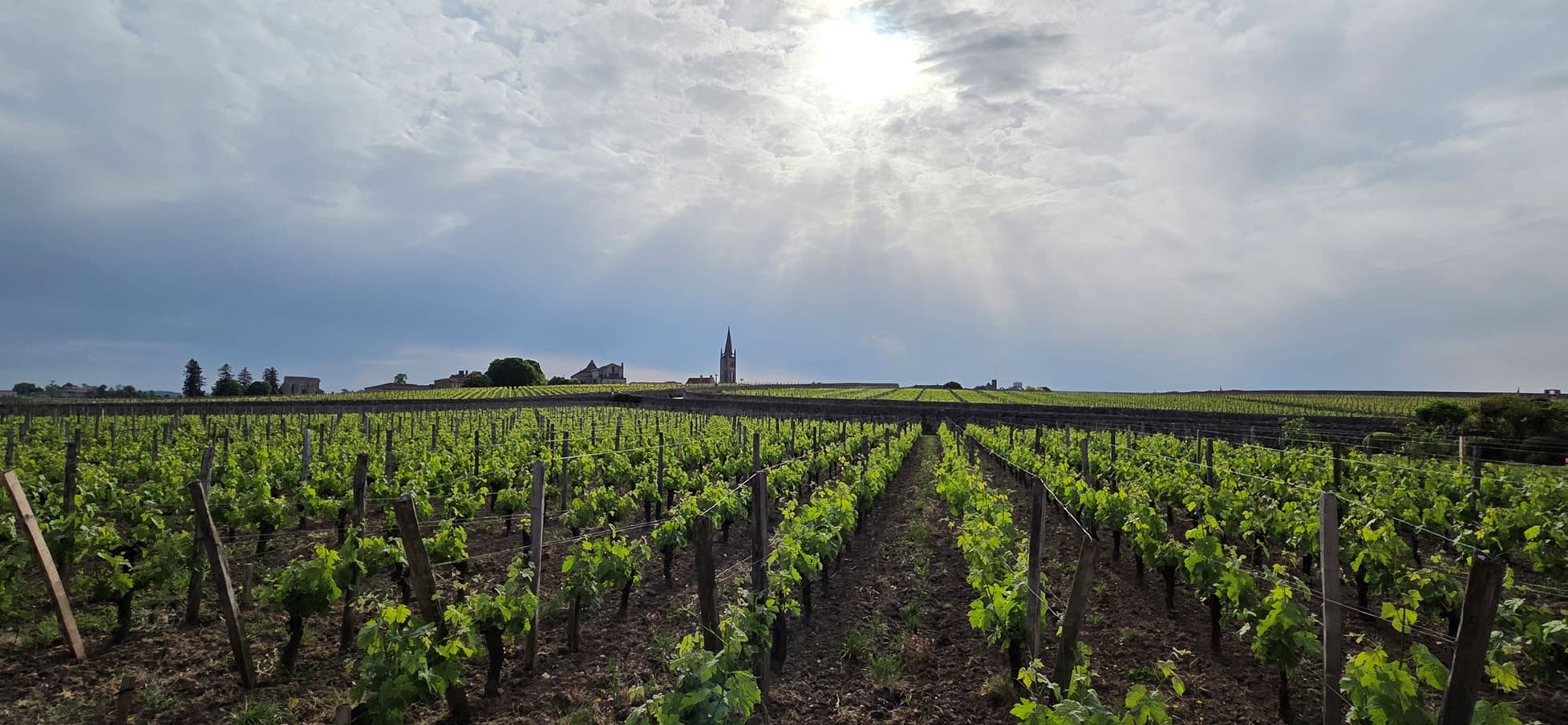
Introduction to wine investment and collecting

Wine collecting and wine investment overlap, but they are not the same thing.
Collecting starts with the bottle. We buy wines because they matter to us: producers we admire, regions we want to understand, vintages we want to follow, and bottles we hope to drink. Investment starts one step further away. The bottle is still the asset, but the decision is driven more by provenance, storage, liquidity, pack format, exit route and pricing discipline than by our desire to open it.
That distinction matters because fine wine is not a clean, centralised market. There is no single visible exchange price that every participant trades on. The price most market participants rely on for a quick sense-check is Wine-Searcher. It is a useful indicator, but we should be careful not to overstate its authority. It is essentially an aggregated price drawn from merchants’ current lists. Where liquidity is high and offer density is deep, it can be directionally useful. But it is still an offer-based view of the market. It does not mean there is a bid at that level, and it certainly does not mean we ourselves can sell there.
Determining where the real bid is difficult and does not have a universal answer. Merchants have large private client bases they can approach and pitch trades to. If they succeed, they have found their own pocket of liquidity that is not automatically available to an individual seller. That asymmetry in market access exists between merchants in different geographies and, by extension, between merchants and private investors. A number of exchanges have appeared in recent years, but they are not universal either. They rely on stock sitting in specific storage systems, they do not talk to each other, and they tend to have their own audiences. The main thesis still stands: the market is fragmented, and price determination is one of the hardest parts of it.
The same caution applies to index returns. Published fine-wine indices are useful as market barometers, but they are not investor-experience return series. The most widely cited examples are rolling baskets rather than static portfolios. That can be useful for judging segment direction, but it does not mean a collector who bought a fixed cellar five years ago actually earned the same published return.
So the practical question is not “has wine gone up?” It is “what wine, bought when, stored how, is there depth to that bid, and do I have access to it?”
I do not want to be too discouraging here. You can absolutely make money trading wines. But it is a good idea to understand the risks, frictions and structural asymmetries of this market before committing serious funds.
All of this can sound somewhat anecdotal, so it is worth putting proper structure around it.
What makes a wine investable
A wine becomes investable when four things line up.
First, the producer and label have to be recognisable beyond a single critic or one merchant’s client base. Second, the wine has to have real exit depth: not just prestige, but a credible pool of future buyers. Third, provenance has to be clean. For investment stock, that usually means professional storage, ideally in original case, with as little handling uncertainty as possible. Fourth, the entry price has to leave enough room for carrying costs, fee drag and market disappointment.
That last point is the one the trade often understates. A wine does not merely need to go up in price. It needs to go up by enough, over a realistic holding period, to justify the capital tied up in it and the friction involved in getting out.
Where the mechanics differ: UK, Asia and the US
For a UK-based collector, investment stock is usually best kept in bond. That keeps duty and VAT out of the picture unless the wine is withdrawn, preserves cleaner provenance, and generally makes resale easier. In practical terms, investment wine and drinking wine are often best treated as different pools for exactly that reason.
In Asia, there is no single unified regime, but the reference point is still Hong Kong. Wine duty there was abolished in 2008, with no VAT or GST on wine, which is one reason Hong Kong became the leading wine hub in Asia rather than just another consumption market.
The United States is much less straightforward. State laws vary widely, and some states prohibit direct shipment of alcohol beverages to individuals. That does not make serious collecting impossible, but it does mean the US private collector usually faces more legal and logistical friction than a UK collector holding stock in bond.
That is an important structural point. Wine investment is not just about the wine. Jurisdiction matters.
Storage is not just preservation. It is economics.
Storage has two jobs.
The obvious one is preservation: temperature stability, humidity, security and provenance. The less obvious one is economic. Storage is a carrying cost, and carrying costs change the return hurdle.
Using a simple base case, suppose we buy a case for £1,000, pay £15 per year for bonded storage, pay that storage at the end of each year, and assume a 5% annual hurdle rate. Then the future value that the wine needs to reach at the end of year n is:
Required exit price
= 1000 × 1.05^n + 15 × ((1.05^n − 1) / 0.05)
The first term is the purchase price compounded forward. The second term is the future value of the annual storage payments.
That gives us this:
| Holding period | Required exit price before selling fees |
|---|---|
| 5 years | £1,359.17 |
| 10 years | £1,817.56 |
| 15 years | £2,402.61 |
Even before selling fees, that is already useful. A £1,000 case does not merely need to rise a little. Under these assumptions it needs to get to roughly £1,359 after 5 years, £1,818 after 10 years, or £2,403 after 15 years just to preserve purchasing power and recover storage on a future-value basis. That corresponds to a nominal break-even CAGR of about 6.33%, 6.16% and 6.02% respectively.
If we then assume a typical 10% merchant selling fee on exit, the required gross sale price rises to:
| Holding period | Required gross exit price with 10% selling fee |
|---|---|
| 5 years | £1,510.18 |
| 10 years | £2,019.51 |
| 15 years | £2,669.56 |
Now the nominal CAGR hurdle becomes about 8.59% over 5 years, 7.28% over 10 years and 6.77% over 15 years. That is a very different proposition from “wine usually goes up over time.”
This is also where the distinction between merchant exit and auction exit matters. A 10% merchant fee is a reasonable base-case assumption for modelling. Auction can be materially more expensive in aggregate, especially once the whole fee stack is considered. So if we are modelling returns seriously, 10% should usually be thought of as the lower-friction case, not the upper one.
At the very top end, these hurdles are not absurd. Top Burgundy and top Champagne have at times exceeded them comfortably. But that is not the same thing as saying a diversified cellar will do so automatically, or that every bottle from those regions will.
Initial case value matters because storage is a fixed cost
There is another simple but important consequence of the storage math.
Storage is charged per case, not as a percentage of value. That means the number of cases in the portfolio matters, not just the total portfolio value. All else equal, we want to minimise the number of lines we need to hold in order to deploy our capital.
One £1,000 case is much easier to carry than ten £100 cases, even though the starting capital is the same. Under the same assumptions above, the £1,000 case needs about 6.33% CAGR over 5 years before selling fees. A £100 case, with the same £15 annual storage charge, needs about 16.05%. With a 10% selling fee, those hurdles become about 8.59% and 18.52% respectively.
That has a very practical implication. Cheap wine is not automatically easier to make money on. Once storage is treated properly, low-ticket positions can become structurally unattractive very quickly.
Tax matters, but it matters differently at different levels
This is where the investment logic gets more nuanced.
For a UK private collector, one of the most important thresholds is gross disposal proceeds, not original purchase price and not percentage gain. For a single personal possession, if disposal proceeds do not exceed £6,000, the ordinary chattel gain computation is switched off. If proceeds are more than £6,000 but not more than £15,000, marginal relief applies and the gain is capped at the lower of the actual gain and 5/3 × (proceeds − £6,000). Only above £15,000 do we move back onto the ordinary gain computation without that marginal-relief cap. Sets matter too: if a number of possessions form a set, the threshold applies to the set collectively, not automatically to each component.
That means the tax question is not uniform across the market.
For the simple £1,000 case example above, the required gross exit prices even after a 10% merchant fee are still far below £6,000. So for that specific example, the economic hurdle is dominated by inflation, storage and exit fees, not by tax.
Once we move into higher-value cases, the analysis changes. In a true blue-chip portfolio, especially once individual case values or expected disposal proceeds move above £6,000 and certainly above £15,000, tax starts to matter much more. That does not mean every such disposal will automatically create a painful bill. Disposal structure still matters. Costs still matter. The overall tax year still matters. But it does mean the issue can no longer be ignored.
There is also a tension here. From a pure UK tax-efficiency angle, lower-value individual cases can be attractive because the sub-£6,000 proceeds zone is more forgiving. From a storage-efficiency angle, the opposite is often true, because low-value cases absorb the same fixed storage charge as expensive ones. Good portfolio construction therefore sits between those two forces rather than following only one of them.
The key implication should be clear: portfolio construction in wine has to start with absolute capital, not with percentage allocations. Storage is a fixed cost per case, tax treatment can change materially with disposal value, and smaller portfolios are much more easily distorted by expensive regions or by too many low-value lines. That is why a regional allocation that looks sensible on paper can become actively misleading in practice. Before we decide what percentage should sit in Burgundy, Champagne or Italy, we first need to ask whether the portfolio is large enough for those percentages to buy the right wines in the right format.
How much capital is actually needed?
At this point, percentage allocations by region stop being enough. We have to think in absolute pounds.
A notional 20% Burgundy allocation sounds sensible until we ask what it buys. In a £25,000-30,000 portfolio, that may push us into Burgundy positions that are prestigious but not truly blue-chip. On paper the portfolio looks balanced. In practice, we may just have bought the wrong end of a very expensive region.
That is why I would be cautious about treating smaller fine-wine portfolios as serious investment portfolios at all.
Theoretically, it is possible to assemble a case-only cellar at around £11,000-12,000 built around second-line prestige names. But I would not recommend that as an investment proposition. The problem is not necessarily wine quality. Many of these wines are very good, and many can age. The problem is market structure. Much of the expansion in wine investment over the last decade relied on selling increasing quantities of wines that, historically, would largely have been bought to drink rather than to trade in maturity. Some of those wines will perform well. Some already have. But for many of them, the real question is whether a meaningful mature resale market actually exists at the prices needed to justify holding them professionally for years.
The important distinction is - a wine can be ageworthy without being a strong investment asset. A collector may once have bought it for drinking and stored it in a garage or private cellar, where the holding cost was ignored and treated as economically irrelevant. That is very different from an investor paying for professional storage, accepting fee drag on exit, and relying on someone else being willing to buy the same wine aged by a third party at a premium. In many cases, the investment thesis becomes not quality, but availability. We are effectively gambling that a mature market will exist for those wines at the point we need it. Recent evidence suggests that in many cases this market is thinner than people assumed. There is potentially an argument for a tactical play on relative value between the true blue-chip wines and the rest of the market, but this can only realistically be done in a market with abundant liquidity, with good money supply and significant buying pressure.
For a genuinely investment-led, blue-chip, multi-region cellar, around £50,000 is a more realistic starting point. That is the level at which we can begin to buy the right wines in the right regions without the whole structure becoming distorted by one expensive line or by forced compromises in producer quality.
Those are not mathematically pure thresholds. They are judgment calls. But they reflect real market structure. Once we insist on true first-line Burgundy rather than simply “good Burgundy”, and once we want a portfolio that still has enough Champagne, Italy, Bordeaux and the rest to avoid becoming one expensive line plus ballast, the capital requirement rises fast.
Vintage targets, score targets, original-case requirements and provenance standards can push that figure materially higher again. A blue-chip portfolio built only from top-score, top-vintage, pristine original-case lines will cost more than one built with some flexibility around vintage and format.
Constructing a balanced investment portfolio
At this point, generic talk about diversification stops being enough. In fine wine, a balanced portfolio is not just a spread of regions. It is a spread of regions at the right quality and liquidity level.
That is why portfolio construction in wine has to start with two questions.
First, what proportion of the portfolio should sit in each region?
Second, is the portfolio large enough for those percentages to buy the right wines rather than forcing exposure into weaker or more speculative names?
The table below is a useful guide to the structure of a balanced, serious investment-led cellar (remember this is opinion, not gospel and it is also what makes sense to the author at the time of writing):
| Region / sleeve | Target allocation | Why it belongs | Main caution |
|---|---|---|---|
| Champagne | 25–30% | Strong brand recognition, long ageing window, relatively stable demand across prestige tiers, and one of the clearest overlaps between collecting and investment logic | Top names can already be expensive, and not every prestige cuvée has the same exit depth |
| Italy | 20–25% | Strong commercial relevance at the top end, concentrated around a small number of powerful names in Tuscany/Bolgheri and selective Piedmont exposure | Market depth narrows quickly once we move beyond the top names |
| Burgundy | 15–25% | Essential in any true blue-chip cellar; top producers remain the clearest prestige assets in the market | Access cost is extremely high, and smaller portfolios can be forced into speculative exposure rather than true blue-chip Burgundy |
| Bordeaux | 10–15% | Still important in selected situations, especially in mature or mispriced back vintages | Weak long-term pricing discipline and too much reliance on release rhetoric rather than secondary-market reality |
| Spain / Rhône / top New World | 10–15% | Useful diversification sleeve for serious prestige names outside the three main European cores; adds upside and stylistic breadth | Secondary market is thinner and more concentrated, so stock selection matters much more |
| Emerging / conviction sleeve | 0–10% | Space for research-heavy, up-and-coming names or regions where quality is real but market depth is still developing | Least defensive part of the portfolio; should stay small unless the wines are also attractive to drink |
This is not a drinking-cellar allocation. It is an investment-led allocation built around recognisability, depth of demand and credible exit.
It also reflects the key judgments that matter today.
Bordeaux should not be the portfolio backbone.
It still deserves a place, but only selectively and only where the price already reflects the region’s weak recent market behaviour.
Champagne deserves a larger weight than portfolio models usually gave it in the past.
At the top end, the combination of prestige, ageing ability, broad recognisability and comparatively stable demand makes it one of the few categories where quality, collectability and investability align cleanly.
One caveat here - if portfolio is sufficiently large, buying enough wines in Champagne without moving into speculative end becomes a challenge too, so ability to secure enough qualifying stock without over-concentration in a small number of iconic producers and still keeping the number of cases minimal is a concern, particularly if portfolio value is getting closer to £1,000,000 and above.
Italy deserves more room than people who still think in old Bordeaux-centric terms often allow.
But that exposure has to stay focused on the names that actually carry market weight.
Burgundy is essential, but only when the portfolio is large enough to buy the right Burgundy.
Otherwise the allocation model becomes a trap.
Percentages only make sense if they buy the right quality of stock. If they do not, the allocation should be broken rather than obeyed.
That is why the same table means different things at different portfolio sizes.
At around £50,000 and above, the allocation bands above are meaningful in a true blue-chip sense. At that level, we can actually buy the right end of Burgundy, the right end of Champagne, and still maintain serious positions in Italy and a selective sleeve elsewhere.
Below the true blue-chip threshold, the same table may still be directionally useful, but I would be cautious about treating it as an investment blueprint. At smaller sizes, regional balance can become actively misleading, because the percentages may force exposure into wines that look prestigious without offering the depth, resilience or exit quality that a serious investment portfolio requires.
Above a certain threshold we hit another structural problem with some of the allocations difficult to fill because of size and stock availability. Here, arguably, more creative approaches are needed.
A balanced wine portfolio should not be built purely by looking at target numbers. A regional target may look tidy, but if it forces us into the wrong producer level, the wrong case format, or the wrong part of the market, it becomes destructive rather than helpful. The purpose is to make sure capital is deployed across the parts of the market that offer the best mix of quality, recognisability and credible exit.
Regional construction: what makes sense now
For new money, Bordeaux should no longer be treated as the default core just because it is large and historically important. Its role today is much narrower and much more selective. The region has spent too long pricing off prestige, critic scores and vintage rhetoric without responding adequately to the reality of the secondary market.
That does not make Bordeaux irrelevant. It means the burden of proof now sits firmly with Bordeaux rather than with the buyer. In the current market, a collector should very often ask: why buy this new release rather than an older back vintage that is already in bottle, already tradeable, and often cheaper? For investors mindful of past performance, Bordeaux is a minefield. After the recent market repricing there may well be opportunities, but they are unlikely to be in en primeur releases, and caution matters here. Arguably the style of wine Bordeaux became famous for has gone out of fashion, certainly with newer drinkers. The industry is responding by making wines more approachable earlier, but that also means this is no longer exactly the product that commanded the prestige and the premiums over the years. Those who paid those premiums traditionally are now not getting what they liked, and the new buyers are not yet convinced this is what they want. The region is living through an identity crisis and consumers are being asked to finance it.
Bordeaux still has a place, but only in selected wines where the discount is already large enough to compensate for the region’s weak recent market behaviour, and where there is evidence of real demand at that new equilibrium price.
Champagne deserves more respect than traditional portfolio models often gave it. At the top end, the combination of brand recognition, ageworthiness and comparatively stable demand makes it one of the few areas where collecting logic and investment logic often line up. It is also one of the few regions where a serious allocation can make sense across a wide range of portfolio sizes, because the top of the market is strong but not as structurally distortive as Burgundy.
Burgundy remains essential to the blue-chip conversation, but it has to be handled carefully because the market below the very top can become speculative quickly, and producer structure matters enormously. The Leroy ecosystem alone illustrates the point: maison, domaine and tiny estate bottlings are not interchangeable things commercially just because they share a family name. Burgundy belongs in a serious portfolio, but the portfolio has to be large enough to buy the right Burgundy.
Italy deserves real exposure, but the investable strength is concentrated. The first-line names in Tuscany and Bolgheri, together with selective top Piedmont producers, justify meaningful inclusion. Beyond that, market depth falls away more quickly than quality does, which matters for anyone building with resale in mind. That said, Italy also offers one of the more interesting asymmetries in the market. At current price levels, the quality on offer can look under-recognised relative to what comparable wines from other regions would command. That creates potential opportunity, but it is an opportunity that depends on market attitudes and perceptions changing rather than on quality alone. If that rerating happens, Italy can become the part of the portfolio that carries the whole trade. If it does not, the wines need to be ones we are perfectly happy to own and eventually drink at prices we still believe were materially below fair value.
Spain deserves a place too, and for some of the same reasons as Italy. At current price levels, the quality on offer can look under-recognised relative to what comparable wines from other regions would command, which creates potential upside if market attitudes shift. But as with Italy, that opportunity depends on perception changing rather than on quality alone. Historically Spain has been associated internationally far more with everyday wine than with prestige collectables, so the true investment-grade secondary market remains narrower than quality alone might suggest. The top names are serious, but the market beneath them is still much thinner than in Champagne, Burgundy or even Italy. That means the best Spanish exposure is likely to come from a small number of clear prestige names rather than from broad regional enthusiasm. If the rerating comes, Spain can add significant value to a portfolio. If it does not, the wines need to be ones we are perfectly happy to own and eventually drink at prices we still believe were attractive.
New World exposure should be more selective still. The US has genuine blue-chip labels, but the category is much narrower than people often assume. South Africa is more interesting as an emerging conviction sleeve than as a core liquidity market. It is increasingly serious, but still more compelling as a high-quality research-driven allocation than as part of the defensive core.
Critic scores and vintage perception
We rely on critics’ scores heavily. They remain one of the best shorthand indications of quality available to the market. But they do not hold universal value across all regions and all vintages.
In Bordeaux, there is certainly some relationship between higher scores and higher prices, but with important caveats. One obvious example is a vintage such as 2017, which is generally perceived as a weaker year. Even wines that were scored very highly can still trade at discounts to lower-scored wines from stronger vintages. Vintage perception trumps the score.
In other regions, scores arguably matter less still. They remain useful as a directional signal, but age, scarcity, producer hierarchy and vintage reputation often matter much more in practice. If we plotted prices against critics’ scores for some of the most prestigious New World wines, the correlation would often be much weaker than people assume. Age and vintage narrative can matter far more than the marginal difference between 96 and 98 points.
That is why scores are useful, but not sufficient. They can help tell us whether a wine is good. They do not tell us whether it is good value, whether it will be easy to exit, or whether the market will agree with that score in commercial terms.
Why collect, why invest, and why not
The attraction is obvious. Fine wine is tangible, finite, globally legible, and in the best cases genuinely ageworthy. Unlike many financial assets, it has a floor of consumption value: if the market does not behave as hoped, we can still open the bottle.
But the “why not” is equally important. The market is fragmented. Pricing is opaque. Carrying costs are real. Exit friction is real. Tax can matter much more once case values become serious. And the macro backdrop matters because fine wine is a luxury and passion asset. It tends to do best when liquidity is abundant, confidence is strong and discretionary wealth is willing to take risk. If we do not believe those conditions are likely to be supportive over the next decade, we should not build our assumptions as though they are.
The key practical shift is this: a good collection and a good investment portfolio are no longer two entirely separate ideas. A collector may not be targeting a formal internal rate of return, but price sensitivity still matters. Overpaying systematically, ignoring storage drag and pretending every quoted price is executable can damage the quality of the cellar just as surely as they would damage a financial portfolio.
Final thought
Before buying wine with investment intent, the useful questions are not “is this producer famous?” or “did this get 98 points?”
They are more demanding than that.
What will it cost us to hold this properly?
How long are we realistically planning to hold it?
What gross exit price does it need to reach after inflation, storage and selling fees?
Is this a high-value enough line to raise a real tax question on disposal?
How many cases are we using to deploy this capital, and is storage drag working against us?
Are we paying for current critical acclaim when an older vintage may already offer better value?
And if the market stays soft for longer than we expect, are we still comfortable owning the wine?
That is the difference between a cellar that merely looks impressive and one that is actually built with discipline.
Blue-chip reference producers by region
This is a prestige and market-reference list, not a buying list. In some regions the commercial hierarchy is broad enough for a top 10. In others, especially Spain and the New World, the true blue-chip core is narrower.
Bordeaux
- Lafite Rothschild
- Latour
- Margaux
- Mouton Rothschild
- Haut-Brion
- Petrus
- Cheval Blanc
- Ausone
- Lafleur
- Le Pin
Burgundy
- Domaine de la Romanée-Conti
- Domaine Leroy
- Domaine d’Auvenay
- Domaine Armand Rousseau
- Domaine Georges Roumier
- Domaine Leflaive
- Domaine Coche-Dury
- Comte Liger-Belair
- Comte Georges de Vogüé
- Domaine Dujac
Burgundy note: Maison Leroy, Domaine Leroy and Domaine d’Auvenay are not interchangeable. Producer structure matters here more than anywhere else.
Champagne
- Dom Pérignon
- Salon
- Krug
- Rare Champagne
- Louis Roederer
- Jacques Selosse
- Bollinger
- Philipponnat
- Billecart-Salmon
- Taittinger
Tuscany / Bolgheri
- Tenuta San Guido
- Masseto
- Ornellaia
- Antinori
- Soldera
- Montevertine
- Biondi-Santi
- Fontodi
- Tenuta di Trinoro
- Tua Rita
Piedmont
- Giacomo Conterno
- Bartolo Mascarello
- Gaja
- Bruno Giacosa
- Giuseppe Mascarello e Figlio
- Giuseppe Rinaldi
- GB Burlotto
- Luciano Sandrone
- Roagna
- Vietti
Spain
Blue-chip core
- Vega Sicilia
- Pingus
Prestige but thinner market
- Marqués de Murrieta
- R. López de Heredia
- Álvaro Palacios
- Clos Erasmus
- Pesus
- Artadi
- Muga
- Contador
- Ramírez de Ganuza
Germany
- Egon Müller
- Keller
- JJ Prüm
- Markus Molitor
- Dönnhoff
- Robert Weil
- Künstler
- Emrich-Schönleber
- Fritz Haag
- Bernhard Huber
Rhône
- JL Chave
- E. Guigal
- Château Rayas
- Château de Beaucastel
- Domaine Jamet
- Auguste Clape
- Marc Sorrel
- M. Chapoutier
- Château-Grillet
- Stéphane Ogier
New World
USA
- Screaming Eagle
- Harlan Estate
- Opus One
Australia
- Penfolds
- Henschke
- Torbreck
Chile
- Almaviva
- Seña
- Don Melchor
Argentina
- Nicolás Catena Zapata
- Cheval des Andes
- Zuccardi / Piedra Infinita
South Africa
- Klein Constantia
- The Sadie Family
- Kanonkop