Cabernet Sauvignon
Cabernet Sauvignon
Overview
Cabernet Sauvignon is the world’s most widely planted fine red grape variety, covering approximately 341,000 ha globally (OIV 2015, the latest comprehensive variety census).
A natural cross of Cabernet Franc × Sauvignon Blanc originating in Bordeaux, it is now cultivated in over 40 countries.
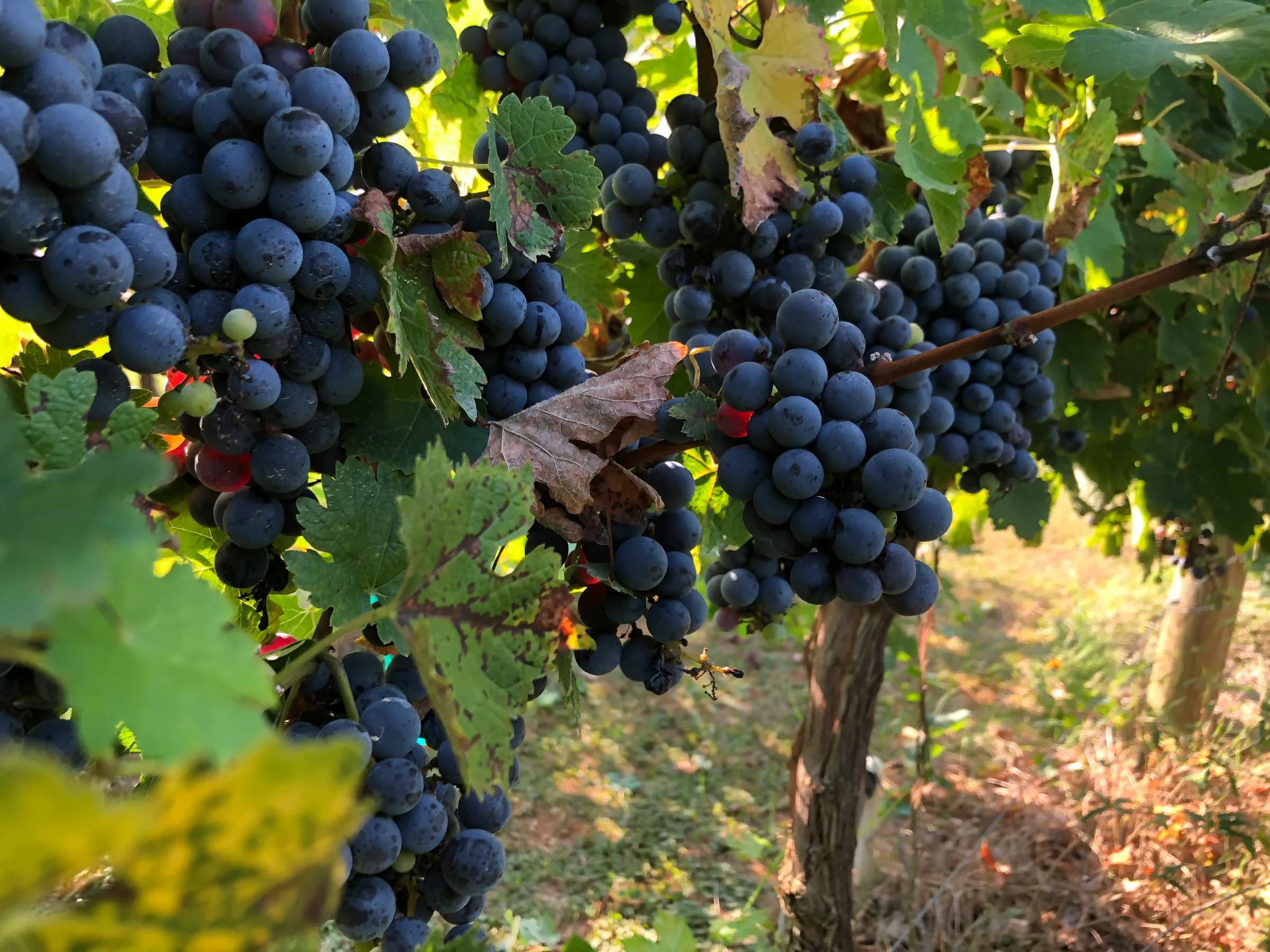
Its thick skins, small berries, and late ripening produce deeply coloured, tannic wines capable of long ageing, while also contributing structure and colour to blends and, increasingly, to dry rosé styles.
Viticultural Profile
Cabernet Sauvignon is a late-ripening, thick-skinned variety that performs best in moderate to warm climates with long, dry growing seasons.
It prefers deep, well-drained gravel or sandy soils and struggles on heavy clays.
Typical yields range from 35–70 hL/ha, with premium wines produced below 50 hL/ha.
The vine is vigorous and needs canopy management to prevent shading and excessive pyrazine (green) aromas.
Hazards include coulure in cool flowering, drought stress, and sunburn in hot conditions.
Its thick skins provide high colour, tannin, and natural resistance to rot.
General Wine Style
Cabernet Sauvignon wines are deep ruby to purple, with aromas of blackcurrant (cassis), blackberry, cedar, graphite, and tobacco.
Acidity is medium to high, tannins are firm, and alcohol levels range between 13–15%.
The wines are full-bodied, structured, and capable of developing complex tertiary aromas over decades.
Major Producing Regions (by scale/significance)
1) France (~50,000 ha / ~4.5 million hL)
France remains the global benchmark for Cabernet Sauvignon, producing both the classic structured styles of Bordeaux and ripe, approachable wines in the south.
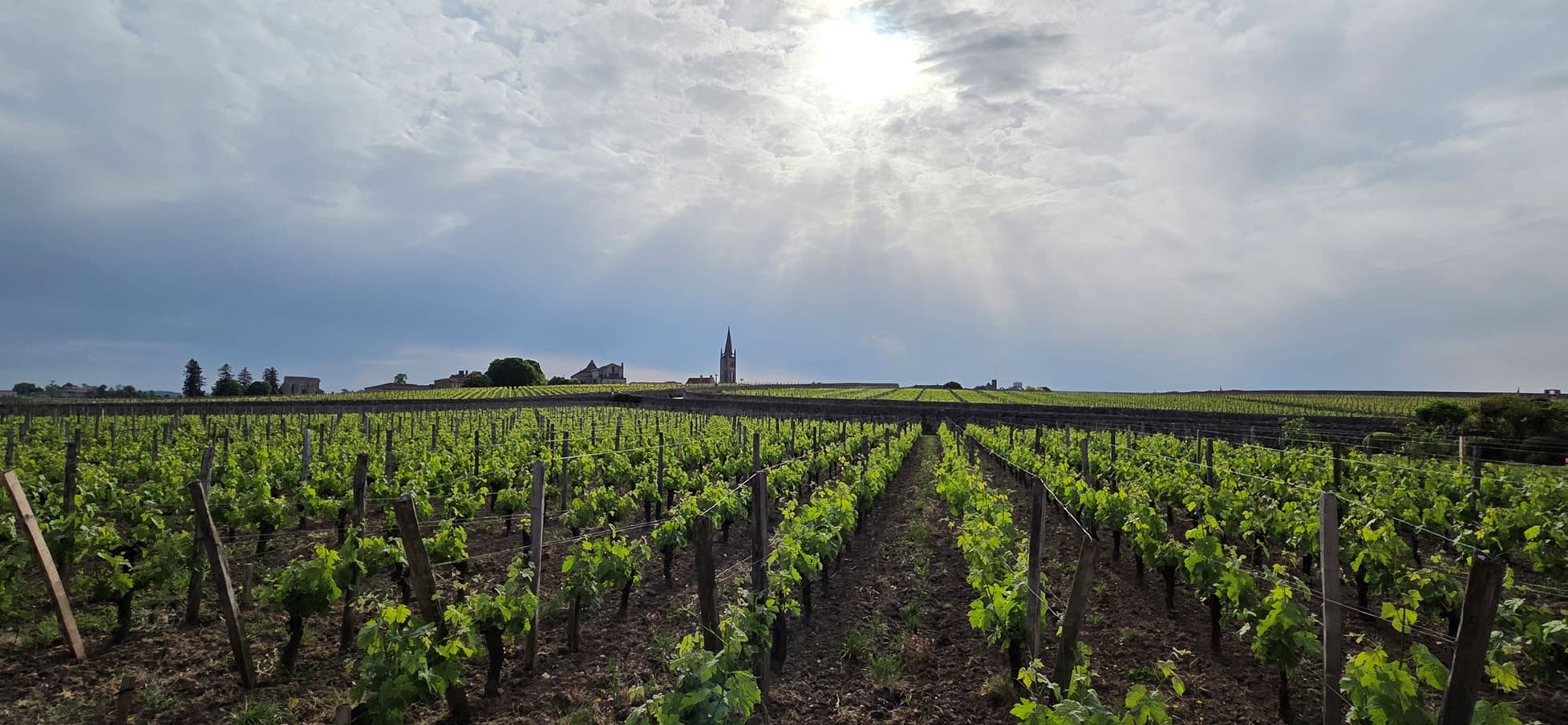
Bordeaux (~26,000 ha)
Gravel and sandy soils over limestone promote drainage and heat retention, aiding full ripening.
Wines are structured and firm, with cassis, cedar, and graphite flavours and long ageing potential.
Yields for classified growths average 45–55 hL/ha.
Cabernet also appears in Bordeaux Rosé AOC and occasionally in Crémant de Bordeaux Rosé.
Key producers include Château Léoville-Las Cases and Château Smith Haut Lafitte.
South of France (Languedoc–Roussillon + IGP ≈25,000 ha)
The Mediterranean climate provides hot, dry summers and abundant sunshine, with limestone, schist, and gravel soils.
Cabernet produces ripe, rounded, fruit-driven wines with soft tannins and lower acidity than Bordeaux.
Mechanisation and irrigation are common; vine densities are lower (3,000–4,500 vines/ha), and yields reach 55–75 hL/ha.
Cabernet–Syrah blends are a hallmark style, especially in Cabardès AOC, while dry, vivid rosés are widespread under Pays d’Oc.
Notable producers include Fortant de France, Les Jamelles, Château de Pennautier, and Mas de Daumas Gassac.
South-West France (~4,000 ha)
Bordeaux-influenced, often earthier styles in Bergerac, Buzet, and Côtes de Duras.
Dry, firm rosés are also made.
Example: Château de Tiregand (Pécharmant).
2) Chile (37,754 ha – SAG 2021)
Key regions include Maipo, Colchagua, Cachapoal, and Maule.
Warm days and cool Andean nights ensure balanced ripening, producing wines with pure cassis fruit, minty freshness, fine tannins, and bright acidity.
Vineyards are largely irrigated; disease pressure is low.
Yields average 55–75 hL/ha.
Rosé is a small (<5%) but crisp, dry category.
Producers: Concha y Toro, Santa Rita, Errázuriz.
3) United States (~42,000 ha / ~3.6 million hL)
California (94,906 acres ≈38,400 ha – NASS 2024)
Thrives in Napa Valley, Sonoma, Paso Robles, and Lake County.
Wines are ripe and powerful, with dark fruit, mocha, and vanilla from new oak.
Premium Napa vineyards yield 30–40 hL/ha.
Producers: Robert Mondavi, Ridge Monte Bello, Justin.
Washington State (~3,000 ha; ~67,000 tons in 2022)
Key AVAs: Columbia Valley, Red Mountain, Walla Walla.
Long daylight hours, cool nights, and controlled irrigation yield concentrated but fresh wines with firm acidity and a graphite edge.
Producers: Quilceda Creek, Leonetti Cellar.
Oregon (~1,000 ha)
Mainly Rogue Valley and Applegate Valley; cooler climate yields red-fruited, higher-acid, herbal wines.
4) Australia (24,682 ha – Wine Australia 2025)
Major regions: Coonawarra, Margaret River, Barossa, Clare Valley.
Coonawarra produces linear, cassis-driven wines with minty freshness on limestone; Margaret River is leafy, refined, and supple.
Yields average 50–75 hL/ha.
Dry rosé represents about 5–10% of Cabernet production.
Producers: Wynns Coonawarra Estate, Vasse Felix.
5) China (~60,000 ha – 2023 estimates)
Main regions: Ningxia, Shandong, Xinjiang, Hebei.
High-altitude vineyards and continental climates give medium-bodied wines with red/black fruit, fine tannins, and graphite-like minerality.
Irrigation is essential; vines are buried in winter to avoid frost.
Producers: Changyu-Moser XV, Long Dai.
6) Italy (~14,000 ha)
Concentrated in Tuscany (Bolgheri, Maremma), Veneto, and Sicily.
Wines combine Bordeaux-like structure with Mediterranean warmth: ripe cherry, cassis, savoury herbs.
Yields average 45–60 hL/ha.
Producers: Ornellaia, Tignanello, Planeta.
7) South Africa (9,934 ha – SAWIS 2024)
Key regions: Stellenbosch, Paarl, Robertson, Helderberg.
Structured yet fresh; cassis, graphite, herbal lift; balanced ripeness and restraint.
Typical yields 50–65 hL/ha; some bone-dry saignée rosé is produced.
Producers: Kanonkop, Meerlust.
8) Argentina (13,006 ha – INV 2024)
Approximately 77% of Argentina’s Cabernet Sauvignon plantings are in Mendoza (~10,000 ha of the national 13,006 ha total), mainly Luján de Cuyo, Maipú, and the Uco Valley.
High-altitude vineyards (900–1,400 m) produce thick-skinned berries, deep colour, firm tannins, and fresh natural acidity.
Typical yields 45–60 hL/ha.
Producers: Catena Zapata, Luigi Bosca.
9) Spain (~19,000 ha)
Mainly in Navarra, Penedès/Catalunya, Castilla y León (blends), Somontano, and Priorat.
Navarra: colour and backbone for blends; Penedès: supple international styles.
Priorat (since the 1980s): Cabernet adds structure/tannin/ageing to Garnacha–Cariñena on schist, yielding dense, mineral, balsamic wines.
Producers: Torres, Chivite, Clos Mogador, Finca Dofí.
10) Others / Emerging
New Zealand (Hawke’s Bay, Waiheke) – graphite, cassis, medium body.
Canada (Okanagan) – crisp, fine-tannin reds and dry rosé.
Mexico (Baja California) – ripe, spicy.
Israel & Lebanon – complex warm-climate styles (Château Musar).
Eastern Europe (Bulgaria, Romania, Hungary) – structured, spicy, oak-matured.
Greece, Slovenia, Switzerland – small-lot, elegant versions.
Other Styles
- Sparkling red/rosé: Australia, California, Bordeaux (niche).
- Late harvest/sweet: Languedoc, Chile (soft-tannin dessert reds).
- Fortified: Languedoc, California (deep colour; small volumes).
- Blanc de Noir (experimental): USA (free-run juice; curiosity).
Blending Roles
- Bordeaux blend: Cabernet Sauvignon + Merlot + Cabernet Franc ± Petit Verdot/Malbec.
- Cabernet–Shiraz (Australia): structure + spice.
- Cabernet–Tempranillo (Spain): colour + backbone.
- Cabernet in rosé: adds colour and dryness to Grenache/Merlot bases.
Why Cabernet Sauvignon Dominates
- Reliable ripening and adaptability across climates.
- Equally strong as varietal and blend component.
- Powerful consumer recognition and Bordeaux pedigree.
- Proven ageability and compatibility with oak.
- Adaptability to modern winemaking and climate challenges.
Recent Developments
- Early-ripening, low-pyrazine clones (e.g., ENTAV 169, 412).
- Precision viticulture and canopy-light management.
- Shifts to cooler, coastal, or high-altitude sites.
- Gentler extraction and reduced new oak.
- Growth in high-quality Cabernet rosé.
- Sustainability: drought-tolerant rootstocks, cover crops, efficient irrigation.
Representative Producers
France: Léoville-Las Cases; Smith Haut Lafitte; Mas de Daumas Gassac
Chile: Concha y Toro; Errázuriz
USA: Robert Mondavi; Ridge Monte Bello; Quilceda Creek
Australia: Wynns Coonawarra; Vasse Felix
China: Changyu-Moser XV; Long Dai
Italy: Ornellaia; Tignanello; Planeta
South Africa: Kanonkop; Meerlust
Argentina: Catena Zapata; Luigi Bosca
Spain: Torres; Chivite; Clos Mogador; Finca Dofí
Summary
Cabernet Sauvignon is the world’s definitive international red grape—technically reliable, stylistically adaptable, and universally recognised.
From the gravelly precision of the Médoc to the freshness of the Andes and the richness of Australia, it consistently delivers depth, structure, and balance.
It remains the global benchmark by which other red wines are measured.
Check your knowledge
Expert quiz