Priorat
1. Overview
Priorat is a small, mountainous wine region in Catalonia, northeastern Spain, and one of only two in the country with DOQ (DOCa) status, alongside Rioja.
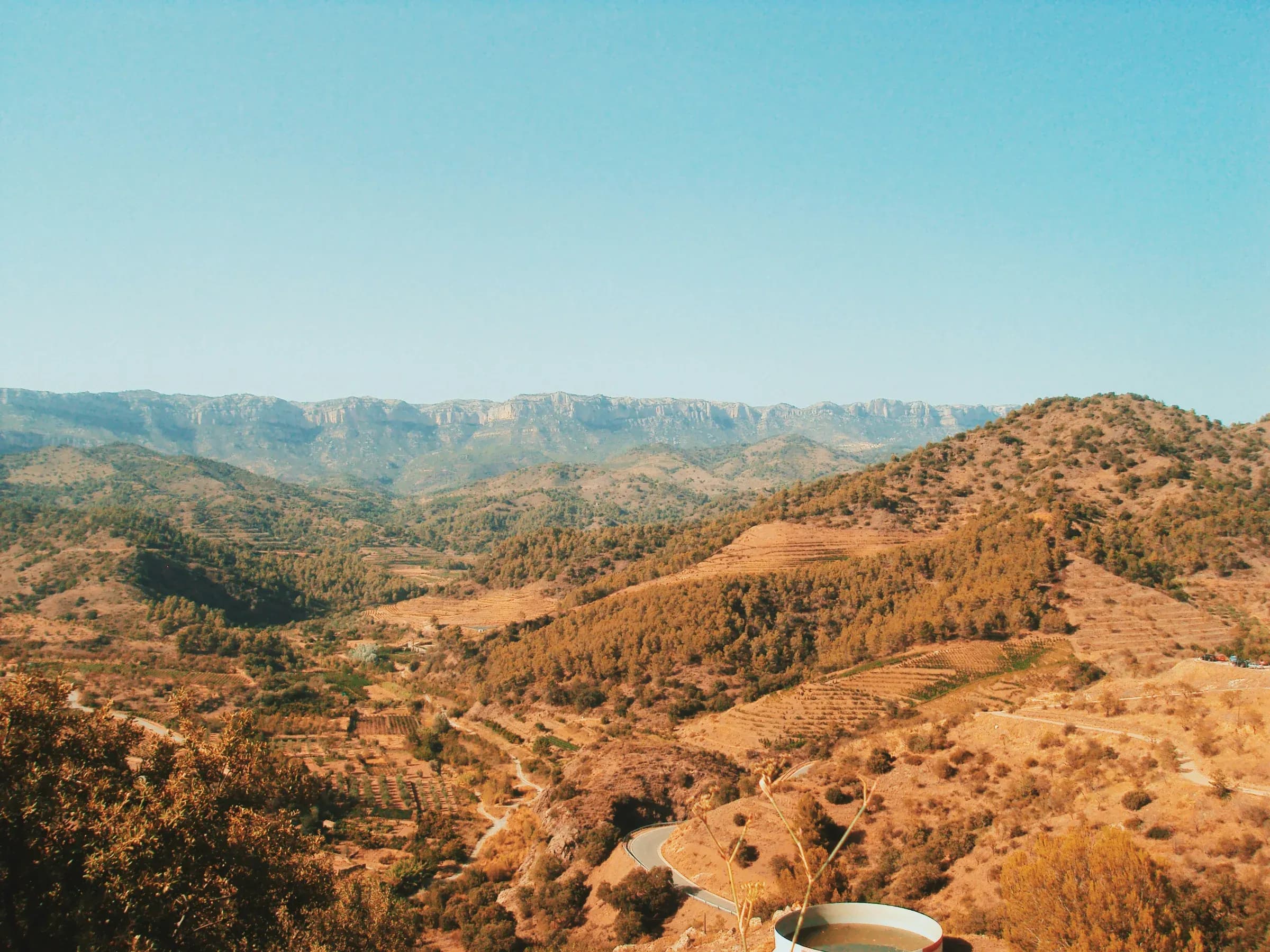
It is famous for its steep slate hillsides, ancient Garnatxa (Grenache) and Carinyena (Carignan) vines, and intensely flavoured red wines.
The vineyards, often terraced and dry-farmed, produce low yields and wines with depth, minerality, and power.
2. History
The region’s winemaking began in the 12th century, when Carthusian monks founded the Scala Dei monastery and planted vines on the rocky slopes.
After centuries of decline following phylloxera, Priorat was revived in the 1980s and 1990s by a new generation of winemakers, including René Barbier and Álvaro Palacios.
Their small, high-quality “Clos” wines put Priorat back on the world map and led to its DOQ status.
3. Geography and Climate
- Location: Inland from the Mediterranean, in Tarragona province
- Altitude: 100–750 m
- Climate: Hot, dry summers and cool nights; Mediterranean with continental influence
- Rainfall: Around 400–600 mm per year
- Soils: Thin, rocky llicorella (slate mixed with quartz) – poor in nutrients but excellent for concentration and minerality
The vines grow in harsh, dry conditions, digging deep roots into fractured slate. The result is low yields but fruit of great intensity and balance.
4. Grape Varieties
| Variety | Colour | Role in Wines | Typical Flavours |
|---|---|---|---|
| Garnatxa (Grenache) | Black | Adds warmth, fruit, and roundness | Red cherry, plum, herbs, spice |
| Carinyena (Carignan) | Black | Brings acidity, structure, and colour | Black fruit, earth, graphite |
| Syrah | Black | Adds richness and dark fruit | Blackberry, pepper |
| Cabernet Sauvignon / Merlot | Black | Used in some blends for structure or softness | Cassis, plum |
| Garnatxa Blanca | White | Used for limited white wines | Pear, fennel, almond, honey |
5. Viticulture and Production
Priorat’s vineyards are small, steep, and terraced, with many old bush vines over 50 years old.
Most are hand-harvested, as machinery cannot work the slopes.
Yields are among the lowest in Spain (often 20–25 hl/ha).
The region has about 2,000 hectares of vines and just over 100 wineries, producing mainly red wine.
6. Winemaking
The powerful style of the 1990s is giving way to fresher, more balanced wines.
Winemakers now use:
- Earlier harvesting to preserve acidity
- Concrete, large oak vats, or amphorae instead of small new barriques
- Gentle extraction for finer tannins
Typical alcohol: 14–15.5 %.
White wines (Garnatxa Blanca) are usually barrel-fermented, showing a rich yet mineral profile.
7. Wine Styles
- Reds: Deep colour, full body, black fruit, licorice, herbs, and a slate-like minerality.
- Whites: Textural, fresh, and slightly saline, often with pear and almond notes.
- Rosé (Rosat): Small production, dry and savoury.
Top reds can age gracefully for 20 years or more.
8. Classification System – “Els Noms de la Terra”
| Level | Description |
|---|---|
| DOQ Priorat | Regional wines from anywhere in the appellation |
| Vi de Vila | From one of 12 recognised villages (e.g., Gratallops, Porrera, Poboleda) |
| Vi de Paratge | From a single, named site (459 defined) |
| Vinya Classificada | Single vineyard of special quality and history |
| Gran Vinya Classificada | Exceptional, grand-cru-level vineyard (only three: L’Ermita, Mas de la Rosa, 1902 Tossal d’en Bou) |
9. Key Villages and Styles
| Village | Altitude | Style |
|---|---|---|
| Gratallops / El Lloar | 200–400 m | Warm, rich fruit, classic Clos style |
| Porrera | 300–600 m | Cooler; structured and long-lived wines |
| Poboleda | 400–650 m | Fresher, higher acidity, elegant reds |
| Scala Dei / La Morera | 350–700 m | Floral, mineral, refined wines |
10. Leading Producers
Álvaro Palacios (L’Ermita, Finca Dofí) • Clos Mogador (René Barbier) • Clos Erasmus • Mas Doix • Vall Llach • Scala Dei • Mas Martinet • Terroir al Límit • Ferrer Bobet
11. Modern Trends
- Focus on balance and terroir expression rather than sheer power
- Increased use of native Garnatxa and Carinyena over international grapes
- Greater emphasis on village and site labelling
- Growing interest in white wines and sustainable viticulture
12. Summary
Priorat is a region of extremes — steep slate slopes, intense sunlight, and tiny yields — producing some of Spain’s most distinctive and long-lived wines.
Its shift from rich, oak-driven reds to fresher, more terroir-driven styles reflects a new confidence and maturity.
Today, Priorat combines Mediterranean warmth and mineral precision in wines of exceptional depth and identity.
Check your knowledge
Enthusiast quiz