Austria
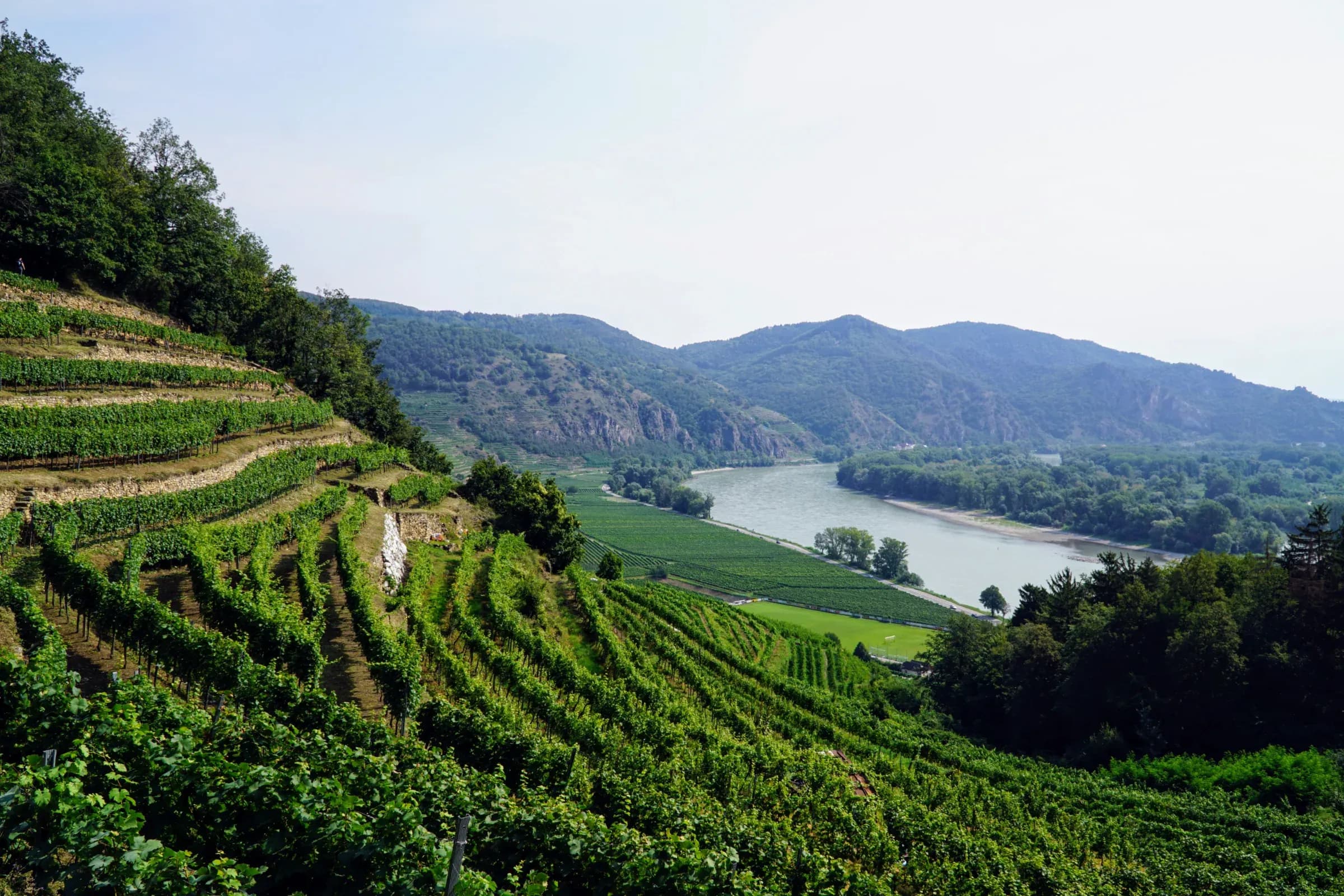
Austria is one of Europe’s most distinctive wine countries. It is especially known for dry white wines, but it also produces important red wines, sparkling wines, and some of Europe’s most characterful sweet wines. Austria’s wine identity is strongly linked to regional origin, and the DAC system helps define which grapes and styles are typical in each area.
1. Main wine regions
Austria’s wine map can be simplified into four key zones:
Lower Austria (Niederösterreich)
This is the largest and most important region for dry whites, especially:
- Grüner Veltliner
- Riesling
Key regions include Wachau, Kremstal, Kamptal, Traisental, Wagram, and Weinviertel.
Burgenland
Warmer and more easterly, Burgenland is best known for:
- Blaufränkisch
- Zweigelt
- noble rot wines near Lake Neusiedl
Styria (Steiermark)
A wetter, hillier region famous for aromatic whites such as:
- Sauvignon Blanc
- Gelber Muskateller
- Morillon (local name often used for Chardonnay)
Vienna (Wien)
Vienna’s speciality is Wiener Gemischter Satz, a field blend of different grape varieties grown and harvested together.
2. Climate and soils
Austria sits between several climatic influences:
- continental freshness helps preserve acidity
- Pannonian warmth in the east helps ripen red grapes and sweet wines
- Danube influence is crucial for fine dry whites in Lower Austria
- Alpine influence creates large day–night temperature swings
- higher rainfall in Styria increases fungal pressure but also supports aromatic intensity
Soil types are also very important:
- Loess is especially important for Grüner Veltliner, often giving broader, spicy wines
- Primary rock and gneiss in Wachau can give more tension and mineral expression
- Limestone is important in Leithaberg and parts of Lower Austria
- Volcanic soils are a feature of Vulkanland Steiermark
3. Key grapes
White grapes
- Grüner Veltliner — Austria’s flagship grape; peppery, fresh, sometimes powerful
- Riesling — dry, stony, high acid
- Sauvignon Blanc — especially important in Styria
- Welschriesling — fresh in dry form, also important for sweet wines
- Chardonnay / Morillon — structured, sometimes oak aged
- Rotgipfler and Zierfandler — traditional white grapes of Thermenregion
Black grapes
- Blaufränkisch — Austria’s most serious structured red grape
- Zweigelt — softer, fruitier, easier-drinking red
- Blauer Wildbacher — used for Schilcher rosé in Weststeiermark
- St. Laurent — elegant, spicy reds in some regions
4. DAC and labelling terms
Austria uses the DAC system to define regionally typical wines.
Important terms:
- Qualitätswein — quality wine with protected origin
- DAC — regionally typical wine from a specific district
- Gebietswein — regional level DAC wine
- Ortswein — village level DAC wine
- Riedenwein — single vineyard DAC wine
- Reserve — usually a richer or more structured style under the DAC rules
Austria also has Sekt Austria for sparkling wine and Wiener Gemischter Satz DAC for Vienna’s traditional field blend.
5. Sweet wine styles
Austria is especially strong in sweet wines around Lake Neusiedl, where humidity and autumn fog encourage botrytis.
Important styles:
- Beerenauslese (BA) — sweet botrytised wines
- Trockenbeerenauslese (TBA) — very concentrated botrytised wines
- Eiswein — made from grapes pressed while frozen
- Ruster Ausbruch — a historic Austrian sweet style associated with Rust
- Strohwein / Schilfwein — wines made from grapes dried on straw or reeds
These styles are usually kept balanced by high acidity.
6. Regional style summary
- Wachau / Kremstal / Kamptal / Traisental → fine dry Grüner Veltliner and Riesling
- Wagram / Weinviertel → spicy, fresh Grüner Veltliner; often fuller on loess
- Mittelburgenland / Eisenberg / Leithaberg → Blaufränkisch in different styles, from dense to mineral
- Neusiedlersee → Zweigelt and sweet wines
- Styria → aromatic, incisive whites
- Vienna → Wiener Gemischter Satz
7. Summary
Austria is a country of precise dry whites, serious reds, aromatic Styrian wines, and outstanding sweet wines. Grüner Veltliner, Riesling, Blaufränkisch, and Sauvignon Blanc are the key grapes, and the DAC system makes regional styles unusually clear and easy to understand.
Check your knowledge
Enthusiast quiz